A continuing series of dispatches from Kopkind participants, advisers, guests and friends on life in coronavirus time as they observe it.
Kayaker facing the storm (photos: Gregg DeChirico)
Grief in Florida
’Tis the times’ plague, when madmen lead the blind…
—William Shakespeare
Fort Myers, Florida
The term 2020 is associated with visual acuity, but chronologically 2020 has been a year of blindsiding trauma. I have witnessed and survived a plague before, that one ignored by Reagan’s White House when I lived in Greenwich Village from 1977 to ’88. AIDS took 34 friends, lovers, and colleagues before I stopped counting and fled the city in grief.
Now the plague’s name has changed, but the circus of obfuscation for political gain remains the same. That and death, as the US toll from Covid-19 exceeds 170,000.
With death comes grief, and its stages of denial, anger, bargaining, depression, and acceptance—a cycle I see distorted in the chaos around me.
This time, I live in the great state of denial… Florida. Denial offered a sublime state of bliss in March, when the kids came down for Spring Break, and Governor DeSantis held off shutting down beaches and bars until it was almost over, conceding to community leaders and medical experts as Covid cases were starting to multiply. And so the kids went home—to Connecticut, Illinois, Michigan, New Jersey, New York… The rest is history.
Except, Florida didn’t let go of denial; it reopened for business on May 4. When the filter of rose-colored glasses finally fell away to the harsh light of reality, blissful ignorance turned to anger.
Anger takes various irrational forms. I live in a working-class neighborhood in Lee County. Here the roads and strip mall lots are dominated by pickup trucks. Some are shiny, though rarely new. Others are battered, rusted, their beds littered with McDonald’s packaging, crushed cans, tools, everything pushed to a corner and held in place by a tire. Virtually all bear insignia—the flag, the Christian fish, Trump/Pence 2020, the badge of some branch of the armed services, an AK47 decal, if not a fully stocked gun rack mounted inside across the rear window. Subtlety having taken a back seat to bold statement in recent months, Confederate symbols, also common, have graduated from four-by-six-inch decals to four-by-six-foot flags, snapping crisply in the wind.
Grief in Florida: Doctors Without Borders sent a triage unit to Immokalee to treat migrant farm workers and track the viral spread. This was not widely publicized. The governor, like the president, blames the workers for spiking infections. In the great state of denial, blissful ignorance turned to anger.
This is still an agricultural region. Tomatoes are a prime commodity, with other warm-weather crops. Harvesting depends on migrant workers, the majority of them Mexican. Despite their intimate connection to Ag profit and the state’s economy, DeSantis publicly echoes Trump in blaming farm workers for Florida’s spiking infections.
Most of the estimated 150,000 to 200,000 migrants converge in or near Immokalee, in neighboring Collier County, surrounded by cypress swamps. They live in tight quarters, often in complex multigenerational families, and ride to work in groups. Hand sanitizer and masks were not made available to them. Maligned as “illegals,” they were denied testing and treatment. It is no wonder the virus spiked here. More surprising is that Doctors Without Borders (MSF) sent a triage unit to Immokalee to help treat patients and track the viral spread. This was not widely publicized. I learned of it while inquiring about volunteer opportunities. Had I volunteered with MSF, I would likely have been recruited to accompany the triage unit on to the Democratic Republic of Congo to assist with ongoing Ebola outbreaks. If I were 20 years younger, I’d have gone.
Out of economic and psychological necessity, I took a job with one of the Big Box Essential Businesses, but I am a naturalist at heart, most content when immersed in a wild setting, captivated by most anything that crosses my path. I love snakes, even the venomous species, among the most highly evolved of all reptiles. However, most people react to snakes with a compulsion to kill. Case in point, my co-worker, Joe Z., ordinarily humble, helpful, affable beyond measure. Joe and I were talking casually about local wildlife when he declared that he will drive his truck onto the sidewalk if necessary to kill any snake he sees.
I tried reasoning, most snakes are benign unless provoked…, but a sentence scarcely passed my lips when his face contorted and he flew into a rant. “They” are… “snakes! They are evil.” Something about Adam and Eve, and how “we” lost everything. “Remember the apple, she got it from the snake!” Faced with his conviction, all I could manage to say was, “Oh, Joe, I used to like you.” To which he laughed agreeably, because he thought I was joking.
It struck me later that Joe is deeply mad. Spiritually, he feels he has been robbed. He blames snakes and seeks retribution through their wanton execution, but the enemy could be anything: face masks, BLM, Democrats, Republicans, Confederate flags, libtards, Muslims, migrants, vote by mail. Everywhere across the country, fear and uncertainty opens a Pandora’s box of festering vitriol, with causes both real and imagined, crossing all communities, in all directions, and becoming amplified as we approach November’s elections.
Anger having failed to resolve grief, elections—our flawed collective bargaining session where winner takes all—is unlikely to, either.
Bargaining of this sort is more likely to prime the losing side to retaliate. At work, I have overheard several break-room conversations about how many guns and what types people have, and where they buy ammunition—prices skyrocket weekly—specifically in preparation for the election. I told a co-worker that I don’t own a gun. Shocked, he later texted me an ad for a $359 Smith & Wesson .38: “Good deal!” The text wasn’t as unsettling as his apparent certainty that armed resistance is imminent. How can we bargain for fairness in a democratic process when civility is off the table, each side bludgeoning the other with demands and threats? It is depressing to think about.
Depression is something most of us know in this grief-struck time. My neighbor burst into tears the other day, standing 10 feet from me, both of us masked. “I can’t take it anymore,” she kept saying, before disappearing behind her door. Who isn’t depressed about a total disruption of life, many unemployed, facing economic ruin, others shut off from ailing relatives and friends? We have become a housebound, home-shopping, home-schooling, Door-Dashing, day-drinking society, castaways from the past, without a clear plan for the future.
Acceptance is the final stage of grief. But is it in this case? Especially when there is a constant flux of people experiencing different stages in different ways, with varying frequencies. When the mere idea of having to accept this as “the new normal” sets the cycle anew.
It is no longer a cycle but a perpetual state of social grief.
As a counter to its weight, I retreat to the natural wild, a world I understand, where the laws are fixed, cyclical, seeking balance. Through the eye of nature, I look for renewal, for calm, and hope to be spared from another hurricane. Speaking of denial…
Gregg DeChirico is a specialist in exotic plants. He is a member of Kopkind’s board of directors, a longtime dear friend, who once lived at Tree Frog Farm.
Scenes From a Pandemic is a Kopkind/Nation magazine collaboration. This piece originally appeared on August 12, 2020 on The Nation‘s website. We thank Katrina vanden Heuvel, D.D. Guttenplan and The Nation crew.
Bonus: A Photo From a Teacher
(photo: Aaron Talley)
Back to school? Aaron Talley, who participated in Kopkind’s political camp in 2015, sent this photograph of his old middle-school classroom in Chicago. In the next installment of the Kopkind/Nation pandemic series, he will have a dispatch from the limbo state of remote learning. Watch for it!August 19 on thenation.com. August 24 here, plus a very special bonus.
A continuing series of dispatches from Kopkind participants, advisers, guests and friends on life in coronavirus time as they observe it.
Mural on the apartheid wall in Occupied Palestine. (photo: Abeer Salman)
Diary of a Never-EndingCrisis
New York City
March. I remember Beirut in 2005, after a car bomb went off, trying not to go near parked cars, and stopping, hyperventilating, catching my breath, and drilling into my brain: “Keep walking, keep going; you can’t control it; you have to keep going.” I need to do this now, here.
Having spent my childhood between Beirut during two wars and NYC in the 1970s–’80s, I have learned to be prepared. I tell myself, “I fear nothing and live for human solidarity.”
Half my Pilates clients are away, some are over 70 and canceled out of fear, and the rest just don’t think it’s a good idea right now. I am officially income-less. My production of Palestine in Chicago will be pushed back at least two to three weeks as of now. I have waited 10 years for a theater to want to do my play again. Now I’m pretty sure it ain’t happening.
I’m making a pink glittery unicorn T-shirt for my niece. I have no problem staying busy. I don’t feel like I have ADHD anymore, because without the confines of other people’s structure, I can do things at my own rhythm.
My shrink says that many traumas will be reactivated during this crisis and asks me how I am doing.
“This is kind of like Beirut, but easier.”
“Oh right. Well, for you it’ll be easier, then.”
I predict the return of telephone calls. I hope no one calls me. I’m an introvert; I hate the phone.
In the store the guy behind me has a cart filled with bottled water. “You must be Lebanese,” I say.
He laughs. “How can you tell?”
“The bottled water.”
There is no need to stock up on water in New York, but that is what Lebanese people do.
I tell people that niqabs (veils over the mouth and nose) were originally worn in the desert to keep sand out of people’s faces, just as masks now are supposed to keep the virus out of our mouth and nose. I explain that Arabs invented soap and the word “quarantine.” No one cares.
There were 6,000 911 calls in the city yesterday. In Beirut, I would hear bombs and artillery fire, and then the sirens. Here it is just sirens. Which is eerie, more unsettling.
Diary of a crisis: nothing is happening; everything is happen-ing.Month after month. I am income-less. I keep busy. I fear nothing, and many things.I feel I am living in a Beckett play.
April. My birthday. My cousins organized a Zoom call for me, and people rang me on the phone. I made a cake. I sang “Miss Mary Mack” with my niece, talked to my nephew, and virtually jumped on a trampoline with my goddaughter. Expect nothing, do nothing, no pressure—perfection.
I’ve knit five scarves. I make pudding, even though I don’t eat pudding.
CNN keeps saying that other countries have more beds in ICU and better medical systems to respond to the virus: “Why? It’s a long story.”
I want to scream, “Socialized medicine! Duh!”
Easter is soon. Maybe Jesus will come back and fix this mess.
For many Americans feeling unsafe is too much. But the whole world lives this way all the time. American exceptionalism needs to die and stay dead.
Meanwhile, I am living in a Beckett play, making up things to do and say so that I exist. There is something satisfying about that.
May. George Floyd is dead.
“Mama, Mama…”
My heart shatters.
My nephew changes his Instagram profile pic to one of John Carlos with his fist in the air, and shares a photo of the George Floyd mural on the wall in Palestine. The kids are alright.
I think about the importance of breath, and breadth. I worry about all that gets left out in our politics. I seem to be out of place. I’m Palestinian and Lebanese; I’m a New Yorker. I tell myself, ‘Keep walking, keep going.’
June. Between the virus and George Floyd’s death, I think about the importance of breath.
I make connections with Palestine, explaining that the IDF trains our cops, that the move used to kill Mr. Floyd is from Krav Maga. I’ve been told that expressing Palestinian solidarity is “co-opting” the black struggle. I should be quiet.
Cornel West keeps mentioning Edward Said on TV. I’m grateful, because no one seems to know that my father’s work helped us get to this point.
I’m glad people are getting radicalized, but I worry about all that gets left out. I worry about the inability to make connections.
I wonder where I fit in this new BIPOC acronym. I just got chased down the street by a nutjob who screamed that I’m a stupid white bitch who doesn’t care about Black lives.
“I’m Palestinian!” I yell, for all the Upper West Side to hear.
“Yeah, bitch, and I’m Cherokee.”
What. The. Fuck.
I am not Black. Or Indigenous. Am I POC? I never seem to have a place here.
A nice gay boy asks if I’m OK.
Happy Pride.
July.Extroverts text and call too much; they need to call other extroverts.
Outside New York, no one wants to wear a mask. Almost everywhere else in the world, people value community. Here it’s the individual, who always seems to be complaining.
We have another family Zoom call—relatives in Beirut, New York, South Carolina, Connecticut, London, Dallas, San Francisco, Seattle—my mom’s generation, my generation, the kids.
My cousin, on his way to Beirut, stops at different ATMS to bring cash and medicine to family members. Lebanon is in free fall for other reasons, but still they test everyone on the plane before and after the flight; anyone who tests positive is sent to a hotel for two weeks. That seems like the proper way to do things.
I kind of loved lockdown at the beginning. Now some days the silence is too much and I just cry.
Nothing is happening; everything is happening.
I am invisible. I am exhausted.
“You must go on. I can’t go on. I’ll go on.”
Najla Said is an actor and playwright, and the author of Looking for Palestine: Growing Up Confused in an Arab-American Family (Riverhead Books). In 2010, Kopkind presented a staged reading of her one-woman play, Palestine.
Scenes From a Pandemic is a Kopkind/Nation magazine collaboration. This piece originally appeared on July 29, 2020, on The Nation‘s website. We thank Katrina vanden Heuvel, D.D. Guttenplan and The Nation crew.
A nurse on a Covid ward in Teheran. (photo: Mohammad Ghadamali/AP Photo)
In New York the 7 pm clapping for nurses and other health care workers stopped months ago. It was always more a ritual for the benefit of those in lock-down; it told us we weren’t alone. Nursing has become symbolic, but let’s honor the work. The WHO, the International Council of Nurses (INC), and Nursing Now recently reported that worldwide there is a shortage of six million nurses–especially affecting the Global South–and deep income disparities. The INC has made a music video in recognition of the work and the people everywhere who do it. In Kopkind’s immediate family, one of those people is Dave Hall, our longtime operations manager and cook, John Scagliotti’s partner, our brother, and a psychiatric nurse in Vermont. For Dave and all nurses of the world: “I Ama Nurse.”
A continuing series of dispatches from Kopkind participants, advisers, guests and friends on life in coronavirus time as they observe it.
(photo: Maria Espinoza)
You’re a Doc, You’ve Got This, But Your Face Shield is Fogging Up
Cuernavaca, Morelos
They say that a person can get used to anything, except not eating. I guess that’s true. After five months of exercising extreme caution as a doctor, it all seems comfortable and easy now compared with those distant days of late February, when the pandemic had just begun to dawn on us all.
Back then, I was getting ready to go to the Mexico City airport to travel to the annual meeting of a group of sexual and reproductive health specialists when a rumor was spreading online that the first case of Covid-19 had been documented in Mexico. It swiftly became clear that the rumor was fact. A colleague, who coordinates training for our loose and vulnerable national network of abortion providers, reported that her husband, an internist at one of Mexico’s most exclusive private hospitals, was treating that first Covid case.
Some of us had surgical masks with us. In the airport, virtually no one used them. Nor do most people use them today, even as the curve of contagion and death bends continually upward.
Our group was divided at first on the seriousness of the threat. In the leftist circles within which I move, most people believed it was a false flag to control Mexico’s poorest and most vulnerable classes. Soon, though, I would see patients in my own clinic in Morelos with respiratory symptoms who would die before they were tested. In New York City, people I know and love would be hospitalized. It was clear that a national emergency was on the horizon, and that, like health workers throughout the world, I would be on the front lines.
With little and conflicting information on how to operate during a fast-arriving crisis, we were all confused. Some colleagues told us to dress like astronauts, basically to armor up, when seeing patients. This would prove difficult when even N95 face masks were sold out or resold online for ridiculous prices. I made do with face masks from the local hardware store, the kind that house painters use.
I was afraid to see my patients, and yet I felt more committed than ever, given the other never-ending health emergency for women who wish to end their pregnancies in a state where it is prohibited. As Covid took hold, my patients also were afraid. When they came to appointments, they brought what protective gear they could, simple face masks or cloth bandanas. We spaced out appointments. My assistants and I used what safeguards we had at our disposal: boots, a double layer of gloves, hairnets, and surgical gowns, along with face shields we purchased from the same guy who sells pirated DVDs in the pueblo.
I used face masks from the local hardware store. My face shield came from the same guy who sells pirated DVDs. I struggled to see what I was doing as my breath fogged up the plastic shield. Anxiety took hold as the risk of making a mistake increased. And yet, everythingturned out fine, every time. I kept waiting for myluck to run out.
The medical procedures continued, as they had to, even as my breath fogged up my plastic face shield, and I struggled to see what I was doing. The risk of making a mistake increased, even when conducting this simple outpatient procedure. Anxiety took hold, and I had to fight the impulse to tear off my uncomfortable and unwieldy gear. The goggles cut so deeply into my face that I sometimes started seeing double. I controlled my fear with deep breathing exercises, which served only to fog up my face shield more.
And yet, everything turned out fine, every time. I kept waiting for my luck to run out. That, or an end to the pandemic. None of this seemed humanly possible, and the working conditions I and the other providers in our network imposed on ourselves seemed similarly inhuman.
Combing my hair became a luxury, so I shaved my head. I began to dress in an improvised version of that space suit others had recommended. The time I had used to take care of my hair was now used to suit up.
Today, the challenge for my risky line of work is getting some of my patients used to telemedicine when possible. While many of my younger patients couldn’t be happier at the chance to treat their problems without leaving their room, others don’t trust it, especially older women who are used to making eye contact, judging me, and feeling my presence.
Yet telemedicine is a necessity now. The script I use to start my calls has become second nature: “My name is Maria Espinoza. Everything we discuss will be absolutely confidential. Everything I ask you is with the aim of getting enough information to make a diagnosis that helps me provide you with the best treatment possible. The main objective of this consultation is to allow you to exercise your rights as a woman. That’s why you should feel free to interrupt me whenever you feel the need to, and so that you can participate actively in this process. I’m here to listen to you, and you have my complete attention.”
I had always started patient conversations this way, but when the phone is our only link, it has become the key to getting close to the lives of the women I treat, gently.
This crisis within a crisis has taught me that responding to change with agility makes us stronger. Looking for solutions is what I have always done. It’s what we’ve always done, as women, as doctors, mothers, neighbors, daughters, sisters, and partners. The pandemic brought paralysis to my work at the beginning, but it didn’t last long. Women began to knock at my door, as they always have, and always will. I had to respond. Fear, commitment, responsibility, propelled me forward. But above all, the will to live and help other women live.
It is with this will, emanating from every solid beat of my joyful heart, that I hope that solidarity continues to fortify us, so that the many-colored hands of the earth can build a better future, in spite of the virus. To do it, we just have to look below and toward the left. That’s where our heart is, and I’m grateful to it.
Maria Espinoza (pseudonym) is a Mexican physician specializing in women’s sexual and reproductive health in a state where abortion is prohibited with some exceptions. For more than 20 years she has helped women assert their rights to make decisions regarding the “autonomous territory” of their bodies.Under her own name, she was a mentor at Kopkind in 2011.
Scenes From a Pandemic is a Kopkind/Nation magazine collaboration. This piece originally appeared on July 22, 2020, on The Nation‘s website. We thank Katrina vanden Heuvel, D.D. Guttenplan and The Nation crew.
Alexander Cockburn, with his dog, Jasper (photo: Tao Ruspoli)
Eight years ago, just hours before members of the Occupy movement arrived at Tree Frog Farm for a special camp beginning July 21, 2012, our beloved friend Alexander Cockburn died. A brilliant journalist, cook, fancy man, Alex had once spent summers at the farm. With Andy Kopkind, his oldest friend in the US, John Scagliotti and others, he was part of the vivid, gamesome world that inspired so many of us who were young with the joy of politics, the joy of writing and doing—of living at an angle to the settled universe. One night during that camp, with torches blazing and flowers gathered from the garden and the field, people from the area came to tell and hear stories of their friend. At the end, one of the campers, Amin Husain, who’d been deeply involved in Occupy Wall Street, offered a poem by Nazim Hikmet.Called “On Living,” it goes, in part, like this:
Living is no laughing matter:
you must live with great seriousness
like a squirrel, for example—
I mean, without looking for something beyond and above living,
I mean living must be your whole occupation.
. . .
I mean you must take living so seriously
that even at seventy, for example, you’ll plant olive trees—
and not for your children, either,
but because although you fear death you don’t believe it,
because living, I mean, weighs heavier.
II
Let’s say we’re seriously ill, need surgery—
which is to say we might not get up
from the white table.
Even though it’s impossible not to feel sad
about going a little too soon,
we’ll still laugh at the jokes being told,
we’ll look out the window to see if it’s raining,
or still wait anxiously
for the latest newscast . . .
Let’s say we’re at the front—
for something worth fighting for, say.
There, in the first offensive, on that very day,
we might fall on our face, dead.
We’ll know this with a curious anger,
but we’ll still worry ourselves to death
about the outcome of the war, which could last years.
Let’s say we’re in prison
and close to fifty,
and we have eighteen more years, say,
before the iron doors will open.
We’ll still live with the outside,
with its people and animals, struggle andwind—
I mean with the outside beyond the walls.
I mean, however and wherever we are,
we must live as if we will never die.
This excerpt of “On Living” is from Poems of Nazim Hikmet (Persea), translated by Randy Blasing and Mutlu Konuk. Hikmet, born in 1902 in what was then the Ottoman Empire, was in a Turkish prison in 1948 when he wrote these lines. Turkish sailors had been reading and discussing his poems, and for that he, a well-known radical, was charged with inciting revolt in the armed forces, and sentenced to 28 years in 1938. Following a hunger strike and a national campaign, he was released in 1950. His work was banned in Turkey from 1938 to 1965.He died in Moscow in 1963. “Read and write without rest,” he advised those who will spend time in prison: weave, make mirrors, anything so that “the jewel on the left side of your chest doesn’t lose its luster.”
A continuing series of dispatches from Kopkind participants, advisers, guests and friends on life in coronavirus time as they observe it.
We Testify abortion storytellers rally at Supreme Court for June Medical Services v. Russo oral arguments, March 2020. (photo: We Testify)
What Kind of Nation Prosecutes People for Health Care?
Washington, D.C.
Last November, I drove more than 12 hours for an abortion. It wasn’t mine (I had mine in 2005); I picked up a young woman in rural Pennsylvania whom I’ll call Raquel. She needed a ride to a clinic in Maryland to get some pills that she would take back at her home to have a medication abortion. As we drove to the clinic, I told Raquel about what to expect during the appointment; after I finished I paused and said, “As much as I love getting to know you on this drive, did you know you could safely do this at home but the government won’t let you?” She was surprised. Like many people, she knew about limitations on abortion but didn’t know that very safe and basic methods are being restricted because of outdated FDA regulations on how they can be dispensed. The drive bonded us—we still keep in touch, and she approved the inclusion of her story here—but it was an unnecessary exercise, one that antiabortion politicians created to make yet another constitutional right as inaccessible as possible. The cruelty of the barricades along the journey is the point.
Since Covid-19 hit, I’ve thought a lot about that drive with Raquel, particularly as people have reached out needing abortions. States have limited travel, issued stay-at-home orders, and required people to quarantine for at least two weeks. While several states declared abortion an essential service, others exploited the pandemic to shutter clinics. The future we have worried about was upon us in an instant. Patients had appointments canceled. Those who could afford it, or who knew about abortion funds, were able to travel to other states for care. The moment was both unprecedented and familiar. The uselessness of our nation’s health care system was showing, and became even more burdensome on abortion patients.
In a just society, Raquel (or anyone wanting an abortion but anxious about contracting Covid-19) could have ordered the necessary pills via telemedicine, online, or at a pharmacy, and completed the abortion at home. That’s the way many people around the world do abortion, because it’s incredibly safe and simple. That’s how Americans once did it. Concoctions were advertised in newspapers and shipped through the mail, or herbs such as pennyroyal and black cohosh root were made into teas. But since the late 1800s, abortion has been deeply criminalized, and if Raquel had ordered the pills online, she and the person who sent them would have risked prosecution and jail.
Covid-19 has brought a taste of what life would be like if abortions were illegal, but then it always has been, in some form… What kind of nation allows people to be prosecuted for health care?
Recently, Polish abortion activists reminded me that all of our laws governing abortion actually promote criminalization. (To be sure, those are different from medical practice regulations that ensure procedures are performed correctly.) Rules dictate how, when, where, and why someone can have an abortion, and mandate a series of physical and legal barriers one must cross. Wait too long because you can’t afford the procedure? You can be criminalized. Take pills at home with a parent because you couldn’t afford a procedure? You both can be criminalized. Have a miscarriage, but a doctor thinks you self-managed an abortion? You can be criminalized. It doesn’t matter whether the rules are medically necessary or just, and of course, enforcement and punishment are significantly more severe with overpoliced communities of color and those who live in poverty.
What kind of nation allows people to be prosecuted for health care?
On July 13, just as this article was nearing publication, a federal judge issued an injunction on in-person requirements for dispensing pills necessary for a medication abortion, saying they create a “substantial obstacle” for patients, and may be an unconstitutional undue burden during a pandemic. The ruling allows providers to mail or deliver the pills to patients—an important step, however temporary, in juris-prudence and in people’s lives.
But this moment has radicalized me. I’ve never supported restrictions—I’ve ex-perienced the panic they create when I was unsure if I could afford an abortion—but I’ve realized that it’s time for us to push for decriminalization of abortion and the abolition of all abortion restrictions. There is no medical necessity for any of these laws restricting abortion. They just create a tightrope for people to fall from and then invite the police into the experience.
As Black Lives Matter protests have swept our country, we are having a national dialogue about the spaces and places police hang around to control black and brown people—schools, hospitals, grocery stores, coffee shops, and our homes. Police are heavily involved in our inability to exercise reproductive freedom; they brutalize us while pregnant; spray us with tear gas, which can affect our fertility;arrest people who choose to terminate a pregnancy outside of the narrow confines of the law; shoot our children; and shackle us during labor. We deserve police-free pregnancies. This is why the fight for reproductive justice is critical. It addresses systemic issues that have long prevented families of color from thriving on our own terms. It’s worth recalling that antiabortion white supremacists pivoted from rallying for school segregation to protesting abortion; they want to control our futures.
If we are serious about protecting abortion access, we have to become serious about the fight to abolish abortion laws. Our ancestors worked hard to ensure we had access to abortion to space our pregnancies, save our lives, and free us from the rape and violence of chattel slavery. It is in their tradition that we must continue to make abortion free and available, whenever and wherever someone needs it.
Covid-19 brought a taste of what life would be like if abortion were illegal again, but it always has been in some form through the criminalization of black and brown bodies. I hope that more people will realize that to have reproductive justice, we have to take extreme efforts to decriminalize our health care, defund the police, and create communities that love people who have abortions, unapologetically.
Renee Bracey Sherman is a reproductive justice activist, abortion storyteller, strategist, and writer. She is the founder and executive director of We Testify, an organization dedicated to the leadership and representation of people who have abortions and share their stories at the intersection of race, class, and gender identity. She is also executive producer of Ours to Tell, an award-winning documentary elevating the voices of people who’ve had abortions.She was a participant in Kopkind’s 2015 political camp.
Scenes From a Pandemic is a Kopkind/Nation magazine collaboration. This piece originally appeared onJuly 15, 2020, on The Nation‘s website. We thank Katrina vanden Heuvel, D.D. Guttenplan and The Nation crew.
Bonus: ‘I Know the Price of Life’, a Radio Short From Gdansk
Maria Margaronis writes from London, with another in her series of shorts about women making masks; a slightly different version of this radio piece was broadcast on Woman’s Hour, BBC Radio 4, on May 14.
Khedi Alieva (l) and her sister Amina (r) in Poland, amid the forsythia. (photo: Dorota Jaworska)
I spoke to Khedi Alieva this spring with the help of translator Joanna Dabrowska, and also to her friend, psychologist Dorota Jaworska. Khedi is a Chechen refugee in Poland. She and her sister Amina are members of Fundacja Kobiety Wedrowne, which roughly translates as Foundation for Women on the Road. Khedi and Amina were welcomed to Gdansk by Pawel Adamowicz, the city’s mayor for 20 years, who was fatally stabbed on January 13, 2019, while speaking at a charity event. Adamowicz’s support for migrant, minority and lgbt+ rights ran directly counter to the policies of Poland’s increasingly reactionary Law and Justice Party, which squeaked back to power this month on the back of a nasty campaign in which President Andrzej Duda attacked gay people, Jews, and liberals, who he says are undermining Poland’s security and traditions.
Khedi, “making masks to slow down death.” (photo: Anna Rezulak / KFP)
But Khedi and her sisters are all about solidarity, gratitude, joy, and life. When the pandemic hit, they began sewing face masks and scrubs to protect their Polish friends, taking breaks to dance to the wild rhythms of Chechen music, a sampling of which Khedi chose for this piece. “The most important thing in life is just life.”
Maria Margaronis, a writer and radio maker, is a longtime neighbor and member of the Kopkind family. She is part of Kopkind’s honorary board. Click here to listen to her documentary about the Singer sewing machine.
A continuing series of dispatches from Kopkind participants, advisers, guests and friends on life in coronavirus time as they observe it.
(photo: Gilbert Thompson)
Covid Is the Bomb
Jackson, Mississippi
Before Covid-19, I would travel around the country, listening to people’s stories as we walked their block, or plotted the “beautiful next” in some center or meeting room. Now we are all in little boxes, trying to connect, trying to make it more human. People with wild virtual backgrounds or cute hats. It reminds me of freshman year moving into the dorms. There you are with your teddy bears and your posters to make your room feel a little less like the drab, institutional rectangle it is.
The truth is, it’s crazy hard out here for so many of us. Covid has shifted racism and inequity into hyperdrive. Shuttered hospitals and limited testing in communities hardest hit. The intentional delay in distributing “stimulus” checks to indigenous nations while slashing funds for health services. A young black woman tells me a story – from her box to mine – about how the white children in her trailer park, not far from Chicago, come by her family’s home to spit and chant, “Covid is a n***a killer!” These children were taught that our disproportionate death related to Covid is an opportunity for ethnic cleansing.
This is a season of wild contrasts. The joyful exuberance of seeing our movements on the precipice of so many significant victories. It’s beautiful. I am breathless and giddy to live to see this moment that I had every confidence would come. And I am also anxious that, as the nation is riveted by global protests to address black lives taken by police violence, we have normalized the deaths of the many others who are also victims of state violence but in a different form.
Police shootings are a gun to the head of Black America.Covid is the bomb. As cities like Jackson are left to fend for ourselves, Covid is also revealing how “we keep us safe”.
Police shootings are literally a gun to the head of Black America, while the government’s use of the pandemic to facilitate black and indigenous death is a full-on carpet bombing. And although they don’t exhibit the glee of those children in the trailer park, much of government appears to be on the same team.
I’ve watched testimony in city councils around the country against local ordinances to require protective masks in public. I’m struck by how often progressive frames are appropriated for conservative use: phrases like “crime against humanity” or “human rights violation,” along with the old tropes opposing public health protection as a matter of “freedom.”
On May 19, the birthday of Malcolm X ironically, Mississippi Governor Tate Reeves gave churches explicit permission to reopen. They were never officially closed in Mississippi, but this bit of grandstanding was part of the governor’s pandering to support Trump in solidifying his right-wing faith base. The governor insisted on lifting restrictions for businesses, too. There were 535 new Covid cases and 42 deaths that day. On June 22 there were 1,646 new cases and 40 deaths. Progressive mayors had instituted public protection rules in an attempt to “flatten the curve,” but as Jackson Mayor Chokwe Antar Lumumba said in a recent interview about the “reopening” of the state: “It was clear that we [Jackson] are becoming an island. And if you’re on an island, it’s hard not to get wet.” On June 30, with new cases spiking, the mayor announced that wearing face masks would be mandatory in the city.
Covid is revealing all of the cracks and fissures in our systems – of care, of connection, in our economy. As cities like Jackson are left to fend for ourselves, Covid is also revealing how “we keep us safe.”
In my South Jackson neighborhood, masked volunteers sweat under the Mississippi sun as they hand out food and toilet paper. Many of the folk in line brave the heat hoping to be among the lucky ones to get a mobile Covid test before kits run out. The volunteers are friends and neighbors who have stepped up as part of the Jackson Covid Response. It’s a local coalition that includes Jackson State and Tougaloo College students; organizing groups like Poor People’s Campaign, Mississippi One Voice, People’s Advocacy Institute, Mississippi Immigrant Coalition, Democratic Socialists of America, and Black Youth Project 100; neighborhood groups and businesses like Operation Good, Strong Arms of Jackson, MOVE Church, and Bad Boy Tree Services; social service projects like Clean Slate Behavioral Health Collective; and multimedia outlets like the local branch of Black With No Chaser, which has a popular podcast in the community. This coalition is one of the hundreds of mutual aid networks springing up across the country to fill the gaps that the state refuses to address.
The work is hard but it’s also adaptive, innovative, and generous. There’s deep grief in the face of rising Covid-related death as young and old die needlessly in prisons and detention centers. There is also vision as organizers move progressive District Attorneys to release “nonviolent offenders” by the thousands. In Jackson, Mayor Lumumba enacted an agreement to end arrests for misdemeanors and nonviolent offenses that activists believe will keep hundreds out of jail. Yet, hundreds more languish in detention centers and jails throughout the state. Activist Rukia Lumumba told me about a man bailed out by the Mississippi Bail Out Collective. He had spent two months in a DeSoto jail because he didn’t have $150. Thanks to the collective’s efforts, he is out now.
These are a just a few examples of the silo-busting work on the ground that makes the connections between culture, policing, health, immigration rights, and so much more. It’s a politic for our whole lives.
This work, these victories, are sunbursts in the midst of storms. We breathe. We listen. We plot. We dream. And we remember that it takes both the sunburst and the storm to make rainbows.
Makani Themba is an organizer, writer and strategist based in Jackson. Currently she serves as chief strategist at Higher Ground Change Strategies. Makani is a long-time adviser to Kopkind and was a mentor in our first camp, in 1999, and then again in 2017.
Scenes From a Pandemic is a Kopkind/Nation magazine collaboration. This piece originally appeared on July 8, 2020, on The Nation‘s website. We thank Katrina vanden Heuvel, D.D. Guttenplan and The Nation crew.
Jon Flanders, a steadfast supporter of Kopkind, sent us this picture from the northern reaches of Vermont, where he’s visiting family. Since the beginning of the pandemic, Jon has been sending messages about the importance of Vitamin D, the latest good news from Cuba, the latest hair-raiser from New York, the latest protest in Troy, where he lives, the latest bulletin on global solidarity (here a wonderful talk by our friend Vijay Prashad on Che and a socialism of love), an upcoming concert for Cuba and so on. Jon is a retired railroad worker, an internationalist, an organizer of political events (here a recent discussion of labor history with JoAnn Wypijewski and others around Mike Stout’s new book about Homestead Steel, via a Zoom variant of the Connolly Forum), a photographer.
In any other July, we would be in the midst of a Kopkind camp right about now, at Tree Frog Farm in Southern Vermont.Jon’s moonlight photograph is from the opposite end of the state. It bears a message that also imbues Kopkind’s project: there is still beauty in this world; soak it in.
A continuing series of dispatches from Kopkind participants, advisers, guests and friends on life in coronavirus time as they observe it.
(photo: D. Sabin)
A Lesbian Archive Sends Its Love Letter
Oakland
I am deeply urban. My shoes, clothes, eyeglasses, are all assembled with an understanding of how they relate to pavement, changeable weather, and the glare bouncing off city buildings. From Boston to New York City to San Francisco and Oakland, I’ve felt perfectly attuned to the cityscape. But with quarantine, everything went askew, as if I turned a corner into the Twilight Zone.
We’d lived in Oakland for only several months before I left in January for New York City, where my play about Alberta Hunter was enjoying a successful run—an engagement that ended just before the coronavirus landed with both feet in the US. I returned to Oakland as the city was gearing up for lockdown. I thought this would be fortuitous; I’d write endlessly, perhaps in all genres. We had masks. We had access to food. I could read books for unending hours and watch movies and television shows til dawn. The money we previously spent on eating out, going to plays and movies we’d donate to relief efforts.
I have friends who have been teetering on the edge not of armed rebellion but of despondency. I restricted myself to one broadcast news show, allowing my anxiety to be channeled through the erudite rantings of Rachel Maddow as I pondered who cut her hair. I felt a warm spark at seeing other people’s homes in Zoom interviews of political/medical/legal experts. Speaker of the House Nancy Pelosi’s vast freezer of ice cream! Stacey Abrams’ bookshelf with a copy of The Night Tiger, a novel I’d been on the verge of ordering! I felt connected to them.
I couldn’t, however, reconnect with myself. Inertia settled around me like the fog I’d left behind in San Francisco—I couldn’t see the pen in my hand in front of my face. Sunny weather filled my days as camelia blossoms burst forth in the backyard. Birds trilled safely as if they knew they could mesmerize our indoor cats.
But if I read for more than three hours my eyes went blurry. My back rebelled from sitting, although I was only halfway through 10 seasons of the British detective series Vera. Even with my totally non-green thumb I was rewarded by my verdant backyard, a profusion of calla lilies, birds of paradise, and the struggling fuchsia I’d rescued from a plastic bin bag. After dutifully watering, though, I couldn’t just sit and watch them grow.
Something was missing: the ebb and flow of traffic; voices and laughter when people walked by, and any number of sounds that had underscored my life in the city. I enjoy the click of a cricket as much as the next person, but the roll of tires slowing for the STOP sign at the corner had always been the click track of my life.
So, I retreated to the little cottage office in our backyard in search of my own rhythms. I fell into them almost by accident. I’ve been a longtime fan of the British radio soap opera “The Archers,” so I tuned in and was immediately soothed by various English accents, the evocation of a world continuing on. I couldn’t write anyway, so I used listening to the radio online as a time to clear out the boxes still cluttering my office since we’d moved. And here’s where I found what was missing.
A fragment of history tumbling out of the author’s archive
In the little cottage, once I’d disposed of the recycling that we humans tend to box up and lug from home to home, I dove into a large box of photographs. There I was aged 9 in my tap-dancing costume; there was the past tumbling out: my youthful great grandmother; my best friend and I looking unbelievably dewy at our high school graduation; a group of feminist poets after a benefit reading; my first publisher and I when we were young enough to stand up all day at the American Booksellers Association; a clipping from the fight against the New York Times over its coverage of AIDS; and a kaleidoscope of handsome women with whom I’d been lovers over the previous 40 years.
Nancy Bereano, founder of Firebrand Books, and Jewelle at the American Booksellers Association
That was what had been missing—being deeply sunk into myself and a history that had always been sweet and dangerous, creatively rebellious and persistent in the face of grief and greed. I started to feel the heartbeat emerging from within. The city sounds, my natural (or learned) soundtrack, were really only the background, like elevator music. The faces and memories were pulses reconnecting me to the well of emotion and ideas that sparked my life and my writing. They were the jumpstart I had needed.
The author’s great grandmother, Grace, 1897
Once the engine turned over, I figured out how to divide my day into past, present, and future. Now I spend some time continuing to organize old treasures whose roots in last century’s battles against oppression keep me upright. For the future I investigate what nonprofits could use my support to defeat voter suppression—again, as we did in the 1960s; or to find safe places for those without shelter; or gather food for out-of-work parents. (I also plan what to wear when I do return to those urban sounds, and finally get to celebrate the 50th anniversary of the first gay liberation march on its 51st anniversary.) With the past and the future regular parts of my day, the now feels more compelling; change seems more possible. Now I’ll get back to my new play if it still wants me.
Jewelle Gomez is the author of The Gilda Stories, now in its 27th year in print and recently optioned for a TV miniseries. Her plays about James Baldwin and about Alberta Hunter have been produced on both coasts.She is a member of Kopkind’s honorary board.
Scenes From a Pandemic is a Kopkind/Nation magazine collaboration. This piece originally appeared June 24, 2020, on The Nation site. We thank Katrina vanden Heuvel, D.D. Guttenplan and The Nation crew.
On June 29 the Supreme Court declined to hear a death penalty case, thus allowing the government to proceed with the legalized killing of four men in July, the first federal executions in 17 years. What follows is an excerpt from a letter by Peter Linebaugh, written at another crossroads of epidemic, police violence and execution. The letter originally appeared in Socialist Review No. 177, July/August 1994.With thanks to the Socialist Review Archive.
Protesters in front of the Supreme Court, right before their arrest, 2017 (photo: JP Keenan/Sojourners)
When the state kills one person, it is preparing the killing of two. When it kills two, it is preparing the way to kill three. And with three, it prepares to get ready to kill many. Perhaps these changes are not arithmetic; perhaps they are geometric. Or perhaps they are without a mathematical pattern at all. But what is clear is that the death of one leads to the death of many by hook or by crook.
Those who favoured the Vietnam War argued by analogy with a line of upright dominoes. We may put forward a domino theory of the death penalty. One domino knocks over another, and then another and another in a clattering series of collapses, until none are left standing. The death penalty is the first domino. It is followed by another. This second domino might be, let us say, the more frequent informal shoot outs by the police. A third might be a public health disaster where certain populations are deliberately left to die. A fourth might be a massacre for purposes of terrorising a city or a region. A fifth might be the slow enervation of wage reductions and unemployment that inescapably leads to fatal wasting away. Life is devalued.
We might also compare the death penalty to the thin edge of a wedge. A small tap with the hammer is enough to lodge that thin edge into the thick section of the toughest tree trunk. Another blow of the hammer finds a space among the fibres, and a third blow widens it. Afterwards it is only a question of the number of blows from the sledge required to split the trunk in twain. The death of one leads to the death of many.
In Hitler’s Germany the Reichstag Fire Decree of 1933 imposing the death penalty led to others, like the Law for the Protection of German Blood, the Law on Dangerous Habitual Criminals, or the Decree on Asocial Elements which culminated in the death camps of the 1940s. The wedge widened, from the death of one, to a genocide, all in a decade.
Looking at the US states which have reinstituted the death penalty, can we not see that subsequent to the death penalty is the growth of other forms of social morbidity – gang violence, family violence, police violence, tuberculosis, AIDS?
The US Congress is about to make a mighty turn of the screw as it begins hearings on the expansion of the Federal Death Penalty. They are considering 50 new capital offences.
. . .
The state’s brief [in a case] at the Supreme Court of Connecticut … proposed a truly loathsome sentiment. ‘When we lose the collective “nerve” to act, however unpleasant the action required, we sow the seeds of anarchy.’ This notion is profoundly foul. It is the idea that lay behind President Clinton’s personal attendance upon the execution of Ricky Ray Rector in February 1992, and which prepared so directly his victory in the New Hampshire primaries. It is the notion of blood sacrifice. The politician must prove his readiness to kill. It is revolting in every possible way. It is the law of the tyrant; it is the practice of the bully.
A continuing series of dispatches from Kopkind participants, advisers, guests and friends on life in coronavirus time as they observe it.
Kimchee & carnitas taco with crema; add cilantro and slivers of fresh pineapple, if you like. Mmm. (Photo: Jon Pollock)
Food for Hard Times, and Pleasure
Brooklyn
Quarantine has been a shock to our systems that will continue to reverberate in many ways. It has shocked me to mindfulness, especially about my consumer habits. I marvel at old restaurant receipts and wonder, how did I become the person who casually spent so much for this cocktail or that itty bitty plate of fried something or other? How did I come to discard aluminum foil after one use, to waste nourishing foods like broccoli stems or onion skins (great in stock, providing color and flavor), and toss perfectly good leftovers in the trash? Those who raised me would be appalled.
I grew up in Hawai’i on the edge of a sugar plantation in its declining years, the sweetheart trade deals cut between the US government and missionary agribusiness oligarchs having finally expired. Life wasn’t exactly lux. We scraped by on what we cobbled up – hand-me-down clothes, bicycles built from spare parts, and home haircuts (scissors, bowl, one straight line around during the winter, a buzz cut in summertime). One of my older cousins, a family success story as a schoolteacher, would joke that if the little ones were lined up for a picture in front of my grandmother’s house, we could caption it “Save the Children” and make money placing an ad in the back of tabloid magazines.
Only we didn’t need saving. We were never without the things we needed, especially food, and mainly because we took nothing for granted. We were mindful. Now, with anxiety rising all around, the memory of that kind of care has been a comfort, not to mention a means of stretching my shrinking bank account.
Among the many foods of the beloved poverty kitchen of my Hawai’i is kimchee, a staple eaten almost daily, even by children. Some people write it ‘kimchi.’ I do not. That spelling is derived from the Japanese kimuchi. Given Japan’s historical atrocities against Korea, I defer to Koreans about the transliteration of their national dish.
Food –cooking and sharing food –was a delight for Andy Kopkind, and has always been central to the experience of the Kopkind ‘camps’. Hard times are upon us, so here’s a recipe for economy and pleasure too!
Scot calls it Kimchee Out of Anything because … read on!
This recipe isn’t traditional. My grandmother’s is lost to time and death. Making really traditional kimchee takes ingredients harder to find, and a lot more time and effort. Over years of living in the continental US, I pieced this together from tips gleaned from the internet and shared by friends. I find it totally satisfying. I use kimchee in the syncretic food tradition of Hawai’i, which is to say in lots of unconventional ways, fusing it with the cuisines of Puerto Rico, Portugal, the Philippines, Samoa, indigenous Hawai’i, Japan, China, and on across the diversity of cultures that make up the islands’ population. I suggest you do, too. My favorite is kimchee chopped up like coleslaw on Portuguese sweet rolls with mayo and spicy linguica or grilled teriyaki chicken thighs, deboned, of course.
Kimchee is the easiest of all fermentation processes. The less familiar ingredients aren’t hard to find in Asian groceries or online; once purchased, they’re pantry basics. Western foodies embrace them for a reason – they’re delicious. Think of shrimp paste and fish sauce as umami bombs to make foods like packaged ramen or, seriously, cream soups taste new.
Ingredients:
1 medium Chinese cabbage (though see below, and use your imagination)
3 smallish daikon radishes, julienned
½ cup green onions, julienned
½ cup carrots, julienned
2 Tbsp. salt (for curing the cabbage)
½ cup superfine sugar (out of which, reserve one Tablespoon for preparing your cabbage)
20 cloves garlic, grated
½ cup fresh ginger, grated
½ cup gochugaru (Korean red pepper flakes)
1/3 cup fish sauce
3 Tbsp. low-sodium soy sauce
2 tsp. bagoong (Filipino fermented shrimp paste)
1 tsp. bagoong alamang (Filipino salted, preserved whole small shrimp)
1 cup cold water
Cut the cabbage in half by length, and then again across by width into approximately 1½ -inch chunks. Toss with 2 tablespoons of salt and the 1 tablespoon of sugar in a large bowl. Put a weight on the cabbage (I nest a smaller bowl filled with fresh water inside of the bigger bowl, on top of the vegetable), wrap the whole thing in plastic wrap, and place it in the refrigerator or other cool place. Let it sit this way for an hour, or overnight if you like.
While your cabbage is pickling (and weeping a lot of water), make the kimchee paste. Blast garlic, ginger, gochugaru, sugar, fish sauce, soy sauce, and bagoong in a blender until well combined. Remove the paste from the blender to a bowl and add some water, a few tablespoons at a time and no more than a scant cup, until the paste is smooth, about the texture of a creamy salad dressing.
Drain the cabbage of excess water; give it a squeeze to really get the water out. Then mix in the sliced radishes, carrots, and onion. Add the kimchee paste. Make sure you coat the cabbage well. Transfer to jars and refrigerate. Your kimchee will be ready in about two days, though it will be better in a week.
I call this Kimchee Out of Anything because, to me, kimchee really can be made out of almost anything edible. Fruit, like green mangos, can make delicious kimchee. Even fresh or dried fish works. One favorite of my childhood is bacalao, or salt cod, rehydrated and then squeezed dry before being shredded and bathed in kimchee paste, then cured for a day or two. Don’t stop there. Chard (stems lightly blanched before being added to the greens), carrot tops minus the tough ribs, blanched cauliflower, cucumbers, and lots of other vegetables can be made into kimchee. The rule in my kitchen is if you have vegetables that look like they’re on their last legs, pickle or ferment them. Kimchee expands your eating possibilities, and your pleasure, too.
Scot Nakagawa is senior partner in Changelab, a national racial justice think/act lab, and is Race Forward’s senior fellow on nationalism, authoritarianism, and race. He was a mentor at Kopkind in both 2014 and 2017.
Scenes From a Pandemic is a Kopkind/Nation magazine collaboration. This piece originally appeared June 17, 2020, on The Nation site. We thank Katrina vanden Heuvel, D.D. Guttenplan and The Nation crew.
Bonus: Speaking of Pleasure & Hard Times, an Excerpt From JoAnn Wypijewski’s New Book
This month Verso published What We Don’t Talk About When We Talk About #MeToo: Essays on Sex, Authority & the Mess of Life, by Kopkind’s board president and program director. Here are some extracts from the book’s Prologue.
The little girls next door are playing school. The teacher barks, and the students get detention. There are so many ways to detention: being late, being wrong, being poor in math, wanting to be popular, “with your hair all fine and your nails painted and pretty clothes—I like pretty clothes and painted nails, too, but you aren’t all that.” The teacher threatens them all, “good or bad,” if they make her raise her voice again. She raises her voice. They are silent. She threatens to call their imaginary mothers. She threatens to take the imaginary money she’s been given to get them food. It is summer, hot, late afternoon. Detention is supposed to last four hours, three months, a year. A half hour, and the teacher flags. It’s not much of a game with one player. Okay, she announces, everyone can go to gymnastics. “Get in a line, class! No talking! Straight line!” The others obey. She arranges rolling garbage carts for them to jump off of onto the black-tar driveway. Happy shrieks conjure heaven for the first time, as a breeze comes up and an ice cream truck plays its wistful tune and a rat, which none of them sees, scuttles from one yard to the next. “Do it again,” the teacher shouts. “You. Are. In. Training!”
Let’s leave the little girls alone for now with their game, the meanings of which and the elaborate circuits of example, accommodation and rebellion it reflects are, in a sense, the pursuit of this book. I will return to them.
. . .
I didn’t start writing about sex to write about crime. Not all the pieces in this collection concern it, though many do. The first time I wrote on sex and culture, in an essay about Madonna, I was drawn to pleasure in the midst of danger, danger manifest physically in the AIDS epidemic and politically in persistent attacks on sexual freedom, sexual expression, homo- and other sexuality in the rule-breaking category. Desire is the subject there.
Pleasure—the possibilities for it, the absolute necessity of attention to it as part of any radical politics, the meaning of and conditions for it, the substance of intimate life—continues to be my interest. But sexual danger is at the fore in public discourse. Not since the height of the AIDS crisis has sex been so prominently welded to menace, except this period’s version of safe sex, rather than emerging from a community’s erotic sensibility, is a checklist of yes or no questions drafted to standardize consent and, primarily, to avoid legal action. Scandal, the context for many of the pieces here, has become the background noise of life, a thrum that’s stripped the word of its original meaning. Anticipating retribution enlivens people regardless of ideology, and has accelerated into ordinary, terrible fun. Mercy is the scandal now. Reason almost is. Eros is a suspect, and satisfaction in the humiliation of enemy-others is so everyday that as a culture we seem incapable of recognizing it as an extension of the violence we deplore. What we don’t talk about is the red thread running through this book. What are the reasons, what are the causes and complications beneath the roar of the crowd, the stories we think we all know? I don’t pretend to have exhausted such questions, and I still hold out for a future where we are not handmaids of punitive authority but authorities over our own bodies, pleasures and risks.
This brings me back to the little girls at the start, playing school. The games of children are typically symbolic tests of the limits of their authority and autonomy. Often, the games involve fear, indulging it as a way of displacing it, gaining mastery, discovering Ah, this is life despite real or imagined danger. That is why the games of children are frequently risky (and sometimes go terribly wrong) or are simply heart-racing, involving fantasies of witches and monsters. When I was a little girl, playing in the yard across the fence from where these new little girls were playing, my brother and I made a game with neighborhood kids which he called Come, Little Children. It was basically a game of tag, but we ratcheted up the thrill factor by making whoever was It a witch. The witch sang a weird little song, creepy and enticing—Come, little children, come, come, come…—accompanied by luring hand gestures and gyrations, trying to tempt the other children, lined up along a safe zone against the front of the garage, to step off and run for their lives, imaginatively speaking, either outwitting the witch to get to the next post of safety, or coming under Its thrall. This was in the 1960s, but it could have been centuries earlier, so traditional is the extraction of joy from the sensation of fear.
The little girls’ leaps from wheeled garbage bins onto the blacktop, and their peals of laughter, reflect this age-old practice of pleasure-seeking through defiance of fear. Their wild risk-taking, though, exploded in a context of repression. Training games are customary, the child’s Let’s pretend enacting grown-up behavior—preparing them for the world they will inherit while also rehearsing, in rough form, their relationship to authority. As Marina Warner shows in her fantastic book No Go the Bogeyman,the mimicry of such games is often madcap, comically exaggerated in the anarchic spirit of play, metaphorically robbing the authority figure of some of its power. The teacher in this game, the oldest of the bunch at maybe ten or eleven, did not seem to be poking fun at her model, and except for a few groans, the littler ones in detention did not challenge her—the whole exercise less an imaginative enactment than a reproduction of reality, as numerous schools have determined that what best suits working-class children are the regimens of prison. On first impression, then, this was a game of obedience, not autonomy. Yet the rigors of improvised gymnastics gave loft to the leader’s own dreams of performance even while intensifying her responsibilities. Instructing the smaller ones on discipline and technique as they prepared to leap, and leap again, protected them from injury and brought them joy in the afternoon. It could have gone otherwise, of course. There is nothing simple about play.
A little-boy violin player especially likes the “Ode to Joy.” It has been called a balm for things he doesn’t want: anxiety and nightmares, disabling grief over his father’s murder. As for what he wants… How much unarticulated desire is bundled in that choice? How long will he, will any children but especially boys, be allowed to be sensitive?
Long before any of us learn about sex, we learn about authority: our parents’ over us, the wider world’s over our parents, their response to that wider world’s power, and the costs of any yes or no. The game of school was one game by one group of little girls on one leafy afternoon on the hard side of a hardish town, what used to be the black and Polish East Side of Buffalo, New York, and is now the mostly black, latinx and Bangladeshi East Side. The girls appear to be loved, well cared for, polite, curious. I know almost nothing about their family’s relationship to the landlord, the tax man, the bill collector, the policeman, the boss or social service agent. I know that at a nearby health clinic, adults drop in to talk sometimes about the stigma of being from the East Side, which, as everyone plainly sees, the city’s leadership doesn’t know what to do with. In this particular neighborhood about half the people are officially poor, reports of violent crime are among the highest in the city, and at least a third of the boys and girls in middle school and high school have seen someone shot, stabbed or assaulted—meaning almost every child knows a child who has witnessed violence, and the victim might be a parent, a sibling, a neighbor or friend. The kids learn to hit the ground when they’re told to, and in school what they don’t talk about is often what they can’t talk about. Over the past couple of years, the city’s grown-ups have sought ways to unburden children of the things they carry. One little boy has found a way, sort of, through playing the violin. It is necessary that the community come together to talk about violence. Violence is what nobody wants, not even, perhaps, the stick-up boys who, once upon a time, not long ago, may have been labeled “emotionally disturbed” in school because of the things they carried, and were then put on the short bus or in detention or suspended. Violence is a subject that doesn’t wear out, but its most insidious forms don’t require a weapon.
That little-boy violin player especially likes the “Ode to Joy.” It has been called a balm for things he doesn’t want: anxiety and nightmares, disabling grief over his father’s murder. As for what he wants… How much unarticulated desire is bundled in that choice? How long will he, will any children but especially boys, be allowed to be sensitive? How do they talk about wanting when they want so much? When they might be afraid of their wanting, or the paths to it are obscured?
Listening to the little girls across the fence, I wondered what would be their blossoming pear tree, the emblem that stirs them in their bodies and their souls, as it did Zora Neale Hurston’s Janie:
“like a flute song forgotten in another existence and remembered again. What? How? Why? This singing she heard that had nothing to do with her ears. The rose of the world was breathing out smell. It followed her through all her waking moments and caressed her in her sleep. It connected itself with other vaguely felt matters that had struck her outside observation and buried themselves in her flesh. Now they emerged and quested about her consciousness.”
I wonder at all that must quest about the consciousness of these children, and all that will, and the distance between lived experience on an ordinary day and the rote political language of essences and -isms that is too straitened to contain it. By way of analogy, it is maybe not incorrect to say, as one high school teacher’s guide to Their Eyes Were Watching God does, that the book “explores sexism, race and class discrimination, and the disappointment of loveless marriages,” but then it wouldn’t be incorrect to say that the book explores a black town, the Everglades, a hurricane and what to do when your man has rabies. Either way, Hurston is spinning in her grave, because the language is insufficient and the optic narrow. Janie’s story is about getting free, about a woman coming to know her own body and mind, and daring, along the stony road and against the common sense of the time, to live and love authentically. Sexual politics cannot ignore the many forms that danger and domination take, else how could it be called politics, but it is nothing without freedom as its star, and the effort to change the common sense of the time, for the sake of every mother’s daughter and son. I try to remember that.
A continuing series of dispatches from Kopkind participants, advisers, guests and friends on life in coronavirus time as they observe it.
Fulton County DA candidate Christian Wise Smith (photo: Miles Sager)
‘This Is About the Future of Criminal Justice’
Atlanta
Christian Wise Smith’s earliest memory of police is watching helplessly as officers arrested his mother when he was 5 years old. Two years later, he witnessed his grandmother being strip-searched after she was caught shoplifting.
“I grew up in the justice system. I grew up seeing a lot of my friends and family destroyed by crime, violence, drugs,” he told me over the phone in late April. “I know from personal and professional experience what will work to make us safer and better overall.”
On June 9, Wise Smith, an attorney with seven years’ experience as a prosecutor and a background in management and policy, will be on the ballot for District Attorney of Fulton County, which Atlanta straddles. He is the first progressive candidate in recent memory to run for the office. His campaign represents the local touchdown of a nationwide movement that has seen progressive prosecutors winning elections on promises to steer their communities away from mass incarceration and the criminalization of people of color.
But Wise Smith faces an unprecedented hurdle. Georgia’s stay-at-home orders had been in effect for about three weeks when we spoke, and I was wondering how the shutdown would affect his campaign.
Local elections suffer from low voter awareness in the best of times. During the pandemic, they’ve receded even farther from public consciousness.
How do you get the word out when you can’t knock on doors and shake hands? Smith’s Instagram is full of selfies, his black beard and glasses framing a surgical mask as he plants campaign signs all over town. Some feature supporters expressing approval from a distance. He’s participated in Zoom candidate forums and livestreamed discussions with local hip hop artists, nonprofit leaders, and elected officials.
How do you campaign in a pandemic? The Fulton County DA’s race is part of a nationwide movement of progressive prosecutors vying for office. “Justice does not equal convictions,” candidate Wise Smith says. “I want to create a system that cares more about people than conviction rates.”
The stakes of the Fulton DA race are high. “It’s about the future of criminal justice in Atlanta,” Jonathan Rapping, president of Gideon’s Promise, a public defender organization, said.
“Atlanta suffers from all of the symptoms of mass incarceration. If you walk into a courtroom in Fulton County Superior Court, you almost wouldn’t know there are white people breaking the law in Atlanta. Everyone being sent to jail is poor. And that’s under Paul Howard’s tenure.”
Howard, the incumbent, took office in 1997, and has run unopposed every election since 2004. He has maintained a tough-on-crime approach that has deepened racial disparities.
Perhaps the most egregious example is the Atlanta Public Schools cheating case. Howard charged 35 educators with racketeering and conspiracy for allegedly changing students’ answers on standardized tests: 34 were black; white teachers implicated in the initial investigation were never charged. For the first time in the nation, educators accused of cheating were slapped with charges that carry decades-long sentences.
Seven years and millions of dollars later, that case is still playing out, as seven educators appeal convictions in perhaps one of the biggest boondoggles Georgia’s criminal legal system has ever seen.
The third candidate in the DA race, Fani Willis, was a lead prosecutor on the cheating case, and her politics hew closely to Howard’s.
“Bullies,” Wise Smith said when we talked about his opponents and their role in the case. “RICO charges are for mobsters and gangsters, not teachers.”
“It still hits a nerve,” he said. “A lot of people felt that the justice system, and Paul Howard and Fani Willis specifically, abused their power. People who committed violent crimes didn’t get the treatment that those educators got.” A video he released on that theme is his most watched, with thousands of views across his social media channels.
Wise Smith is also committed to ending cash bail, a reform that officials across the country are increasingly embracing to try to level the playing field between poor people, who get stuck in jail awaiting trial, and wealthy people, who can buy their way out.
“If you walk into a courtroom in Fulton County Superior Court, you almost wouldn’t know there are white people breaking the law in Atlanta. Everyone being sent to jail is poor. And that’s under Paul Howard’s tenure.” — Jonathan Rapping, president of Gideon’s Promise, a public defender organization
The County Jail and its annex have become chronically overcrowded, with deplorable conditions, prompting human rights groups to sue. Covid-19 has made the situation worse. In early April, Southerners On New Ground staged a protest demanding a mass release. Women in the jail annex, they said, had described being on lockdown with eight people to a cell, with overflowing sinks and toilets, and no masks, hand sanitizer, or soap. In an email, a spokesperson for the DA’s office said Howard recommend the release of more than 300 of the 2,600 people in Fulton County jail facilities.
Ultimately, Wise Smith said, this race is about the values behind the policies. “Justice does not equal convictions” is how he summed his up. “I want to create a system that cares more about people than conviction rates.”
That’s a major departure from the prevailing notion that a prosecutor’s job is to rack up guilty verdicts like home runs. With 2.3 million people locked up nationwide, the need for a different approach is plain.
Now, protests are rocking Atlanta, along with dozens of cities across the country, sparked by the police killing of George Floyd in Minneapolis. It has been an outpouring of rage matched by police aggression. Alarmed by blazing police cars and smashed storefronts, Mayor Keisha Lance Bottoms made an impassioned speech Friday night, imploring protestors to go home. “If you want change in America, go and register to vote,” she said.
While national media declared Bottoms a rising star and possible Democratic vice presidential nominee, many of her constituents were angered by a directive that seemed to downplay the suffering underlying the protests. Those will take more than an election to rectify. For years, the overpolicing of black communities in Atlanta has gone hand-in-hand with gentrification, which Bottoms has championed since her days on City Council. In the last mayoral election, many people affected by poverty and displacement rallied for a progressive candidate only to end up with two front-runners propelled by corporate backers. When it comes to the Fulton DA, voters haven’t had a real choice for 16 years.
Protestors are rejecting the false dichotomy Bottoms presented between protesting and voting. On social media, young people in Atlanta are expressing their intent to do both. When we caught up earlier this week, Wise Smith said he hopes people who are galvanized in this moment will go further.
“These riots are a response to generations of frustration and anger built up. I echo the frustrations of people being told to just go vote. I’m taking it a step beyond and actually running for office, and I encourage other people to do the same. If we are frustrated with the only option that we have had, let’s be that next option.”
Scenes From a Pandemic is a Kopkind/Nation magazine collaboration.This piece originally appeared on thenation.com on June 3, 2020. We thank Katrina vanden Heuvel, D.D. Guttenplan and The Nation crew.
Bonus: An Image From Brazil, plus…
Fora Bolsonaro! / Get out, Bolsonaro! (artist: Ingrid Neves)
Our friend Vijay Prashad, the indomitable writer and activist, who was a guest speaker at Kopkind in 2010, has been disseminating extensive international reports, research, newsletters and visual images with his comrades at Tricontinental: Institute for Social Research. The image above is part of a “CoronaShock Sketchbook,” a group of visual reflections made in quarantine by artists and militants from around the world, invited to accompany Tricontinental’s dossier CoronaShock: A Virus and the World. That document, published in May, deals with structural aspects of the crisis; offers a 16-point program to address the most dire needs of the global working class, based on the experience of struggle and governance by more than 200 organizations from almost 100 countries; and presents points for consideration of, and debate on, a Universal Basic Income.
“If you do not feel for humanity in this period,” Vijay writes, “you have forgotten to be human.”
The image here by Ingrid Neves represents the panelaços (banging of pots and pans in protest) in São Paulo, as the night fills with chants of “Get out, Bolsonaro!” “Get out, Fascist!” and “Not him!”It is especially piquant now, with the city alone recording more than 140,500 cases of the virus, and death from the pandemic galloping in Brazil—not just in the cities but, strikingly, among indigenous people in remote areas.
A continuing series of dispatches from Kopkind participants, advisers, guests and friends on life in coronavirus time as they observe it.
Looking out from the inside (photo: Dania Rajendra)
Surviving the Virus, Reading ‘Late Victorian Holocausts’
Jackson Heights, Queens
At first, Covid descended like a slow-motion March snowstorm – the preparing, the suiting up, the slowing of traffic and quieting of city sounds. Once my husband, Ajay, got sick time stretched out. I suppose it was from staying inside a two-room apartment with an incapacitated adult, punctuated by sirens and the constant buzz of my phone.
Between Zoom calls, and then press calls, I cooked and cleaned – it was Ajay who had stocked our home with necessities in the week prior. The few things we needed, neighborhood friends provided, dropping them outside the door we didn’t open. Later, another friend dropped off more supplies, and I waved out our apartment window at her, behind her own car window. How surreal a comfort it was to see my friend’s face, as we talked on our phones, looking at each other across a street, through panes of glass.
All of us who are suddenly non-essential and staying at home experience this crisis through many windows. There are the actual windows, and the glossy screens of our phones and tablets, our televisions and computers. As we watch, the national frames expand to include what some of us have been talking about for years – the deadly consequences of prioritizing profit over people, over planet.
I imagined tens of thousands of people peering into their screens for Angela Davis and Astra Taylor, for Amazon strikers like Mario Crippen, who like many other workers tell the truth as corporate executives spin and spin.
When I looked away from the screens, my perspective would shrink to the sound of Ajay’s rapid breathing. He alternated long stretches of unconsciousness with short bouts of wakefulness, when he chugged grapefruit juice and spouted lucid insights on the snapping of supply chains. Ajay is much better now. The sirens in Jackson Heights are fewer, but the mass graves are more numerous.
The sense of Covid as a threatening snowstorm reminded me of my childhood obsession with the Little House books, especially The Long Winter. I read those racist, reactionary novels constantly – something about them caught my little brown Jewish New Yorker imagination, a fantasy world of self-reliance so different from anything I knew. I can still recall the way Ma forced a rhythm inside their cabin as, outside, the blizzards began to blend into one another, days becoming weeks becoming a season. The town’s men argued about rationing the town’s store of grain against the one store owner’s profiteering, about saving the seed for spring, or distributing it to stave off starvation.
So much about Covid-19 feels like what Mike Davis catalogs in Late Victorian Holocausts: the punitive, racist assumptions that workers are shirkers, rather than people with human, physical, social needs.
The story of climate in The Long Winter is told, in a different context, in Mike Davis’s Late Victorian Holocausts. So much about Covid-19 feels like what he catalogs: the punitive, racist assumptions that workers are shirkers, rather than community members with human, physical, and social needs. Looking at the painted squares on parking lots that our society “offers” unhoused people in lieu of homes, or hearing how Amazon workers keep themselves away from immunocompromised loved ones, I think of Davis piecing together the British authorities’ separation of families dying of famine from one another by gender in work houses.
Outside my apartment, essential workers braved the mass transit and the virus and the small paychecks. Inside our two rooms, Ajay would sleep and wake as his body needed, and the Zoom calls proliferated as more workers took action – their courage a bright hope against the sirens and the fog.
Sometimes I spaced out and considered my father’s mother, R.S. Nagarathnamma, who died in December at 95. She was born in 1924, some three decades after the focus of Davis’s book, and 21 years before Winston Churchill’s choices would again starve millions of Indians. In Late Victorian Holocausts, I found her hometown’s mortality rate in charts – tiny windows that show how near a thing it is that our family survived. I know the odds of survival then depended on advantages not dissimilar to having a full fridge today while most of the country struggles with an unexpected $400 expense (like stocking a freezer in case of a pandemic). I think of the charts some future historian will make – the data visualizations, the contact-tracing like a family tree, until the branch dead-ends with someone who might, say, have a heart too weak to survive a bout of the virus.
Hans Holbein, Death
My grandmother loved beauty and taught me to cherish it. She loved precision, and despaired that I would never learn it. (I haven’t.) She and the rest of my Indian family taught me most of what I know about how to care for others – emotionally, physically, logistically. I have leaned on those skills, both to care for my husband and to function as our world falls apart. But employing those skills carries a price.
For twenty years, from age 17 to 35, when my father died, I flew to India often to spend time with my family there. It was always hard to leave, but my grandmother prized stoicism, something else I have never learned, and I liked to please her. Once back on the plane, buckled into a seat, surrounded by indifferent strangers and with nowhere to go for eighteen hours, I would face the tiny window and freely sob about distance and the uncertainty of who would still be there when I returned.
I think of those feelings now from our Queens apartment, where I feel metaphorically buckled in for long hours, by a big window that looks out over an empty sidewalk. When will our city return? Who will still be here?
For now, it is enough to take courage from the workers on my screens, and Ajay’s returning health, and the contagious solidarity spreading, onscreen and off.
Dania Rajendra directs the US effort to reign in Amazon, as head of the Athena Coalition. A poet, essayist, former labor journalist, an adjunct faculty at CUNY’s School of Labor and Urban Studies, she participated in Kopkind’s joint camp with the Independent Press Association in 2001.
Scenes From a Pandemic is a Kopkind/Nation magazine collaboration.This piece originally appeared on thenation.com on May 27, 2020. We thank Katrina vanden Heuvel, D.D. Guttenplan and The Nation crew.
Detail from Trayvon Martin mural, Oakland (photo: Tennessee Reed, from the cover of Killing Trayvons: An Anthology of American Violence)
The protests exploding in cities and towns across the land recall those of 2012, following the killing of Trayvon Martin, whose stylized image above is from the cover ofa compendium of essays, documents, poetry (edited by Kevin Alexander Gray, Jeffrey St. Clair and JoAnn Wypijewski), connecting that singular extinguishment of a life to the countless “Emmett Till moments” that recently extinguished George Floyd. The fires burning across the land have no precedent since the LA riots of another Spring, in 1992, following the not guilty verdict of police officers whose brutalization of Rodney King had also been captured on video. Andy Kopkind wrote then, also placing the uprising within the history of American violence at home and abroad. Some excerpts.
The Rodney King riot, as it is being called, is horribly perfect in its expression of the destructive elements of African-American experience: the stereotyping of an entire people, the powerlessness of even physically strong men, the prison culture of the ghetto, the cruelty of the law, the despair, discrimination and injustice. Once again shut out of the system, people in their fury took their grievances to the streets, the only place in this country where African-Americans have ever found redress, or the beginning of it.
. . .
The riots were horrifying to many Americans who watched the live coverage on CNN. This time—contrary to the old verse—the revolution was televised. The nation’s leaders piously claim that the violence was “counterproductive,” but in fact it put the issues of race and poverty on the political agenda for the first time in many years. Clinton as well as Bush has studiously avoided even mentioning blacks or poor people this year. As LA burned it was clear that neither one has a clue what to do beyond immediate measures of crowd control, short-term damage control (retrials for the cops) and long-term studies of the “root causes,” which you can bet will have nothing to do with the effects as seen on the streets of LA. The crisis of leadership is seen everywhere. The black mayor of LA and the traditional “leaders” of the black community seem as out of touch with the residents as the white politician downtown and in the statehouse.
It’s not polite to say so, but with their matchbooks and their expropriated VCRs, the blacks of Los Angeles and the Latinos who joined them have reordered the political priorities of the nation, if only for a short while. Without further organization, without the politicization of the rebellious outburst, without a strategy for action and a vision of that future, that order will revert to the same deadlock that has deadened progressive development since the mid-sixties. Twenty-seven years ago Watts burned. Now the rest of the LA ghetto and large tracts outside went up in flames. More than fifty people were killed in what is now officially known as the worst instance of social unrest since the Irish riots in New York City 130 years ago.
. . .
Who the “organizers” of the riots were remains a mystery. Perhaps some of them are among the 9,000 people arrested, but it is doubtful that anyone will ever know. Most of those detained were “looters,” and most of them (overwhelmingly Latino) were taking food and baby supplies, such as Pampers and purees. Although the media showed happy looters carting away expensive electronic equipment (one group pried loose an entire cash machine from the wall of a bank building), many just loaded up on staples. In any case, a society that imposes consumption-fetishism on its citizens can hardly complain when desire explodes out of the unconscious with furious force.
. . .
Slavery and cheap immigrant labor built America in the beginning. Not only blacks in the feudal South but Irish, Italians and Greeks in industrial New England, Chinese along the railroad lines of California and the river levees in Mississippi, and Mexicans in the great farmlands of the Southwest. Some of those groups have been accepted or assimilated; other will be tolerated. But the descendants of African slaves may never be truly free or legitimate in the land that they have worked for 400 years. But still they persist, and neither will they disappear. And the irony is, their anger and agony will afflict the land for as long as they must suffer.
Andrew Kopkind has been called the greatest radical journalist of his generation, chronicling and analyzing the politics, the culture, the Zeitgeist from the 1960s to his death, in 1994. These excerpts are from “LA Lawless,” included in his collected work, The Thirty Years’ Wars: Dispatches and Diversions of a Radical Journalist, 1965-1994.
A continuing series of dispatches from Kopkind participants, advisers, guests and friends on life in coronavirus time as they observe it.
Gloucester Harbor (photo: Hallie Baker)
A Fishy Story
Gloucester, Massachusetts
On a recent locked-down day, cars snaked nose-to-tail through downtown. The destination: a seafood “shop,” popped up on a local commercial fishing wharf. For those who made it in time, $15 bought a pound of scallops, or two pounds of haddock, fresh caught, and delivered in vacuum-sealed bags to the car window, exact change please. For the city’s hard-hit fisher folk, here was a rare bit of good news. The pandemic’s shuttering of restaurants has left those who fish, scallop, clam, and lobster for a living without a major market. Boats are docked, crewmembers let go, pain rippling through a web of marine-related businesses.
“A whole big system is falling apart. It’s not just the fishermen but the people who support them,” says Donna Marshall. Marshall heads up Cape Ann Fresh Catch, like a community-supported agriculture program, or CSA, but for local seafood. These days her group is dropping off locally caught haddock, hake, cusk, and lobster to customers’ doorsteps. The work of turning whole fish into neat fillets is being done by laid-off workers from area restaurants, the only paying work they have right now.
Home-grown efforts to keep people in local fish can’t match the collapse of an industry; direct-to-consumer sales are a small fraction of what fishermen sell to restaurants. Still, the seaside solidarity that the crisis has brought to Gloucester matters. “You’re paying your neighbor’s mortgage,” Marshall says. “This person has a family. It’s not some faceless conglomerate.”
* * *
On the same day that the WHO deemed Covid-19 a global pandemic, a bill was introduced in the US Senate to expand industrial fish farming. Known as the AQUAA Act, the measure has strong support among US farmers, eager to offload a glut of soybeans, rebranded as aquafeed, into fledgling salmon and tilapia bred in pens. Think of it as the industrial seafood supply chain: complex, convoluted, and best not viewed up close. “It’s all driving toward a high-volume, low-value global commodities market,” says Brett Tolley, a fourth-generation fisherman turned community organizer for the Northwest Atlantic Marine Alliance, a Gloucester-based group that advocates for fishers across the country.
Like all global supply chains right now, this one feels unstable and unsustainable. Most of the seafood we eat in America, even in Gloucester, the country’s oldest seaport, comes from overseas. Most of what local fishermen catch is sent elsewhere. “The models aren’t designed to feed local and regional markets,” Tolley says. Those famous fish sticks bearing the logo of a Gloucester fisherman? By the time they reach your frozen foods section, they’ve made an exhausting global journey, exported for processing, then reimported.
Gloucester Fisherman’s Memorial, with bird (photo: Jeri Williams, Yankee magazine)
Nearly 500 commercial boats fished out of Gloucester a decade ago. Today, there are two dozen. This reflects both the decades-long collapse in groundfish stocks—the cod and haddock that once abounded in the cold waters off of Cape Ann—and ever-more aggressive federal measures limiting who can fish and for how much. Privatizing a natural resource has been the governing principle of fisheries management for a decade, the idea being that privatization gives people a greater stake in preservation. Fisheries have thus been carved into slices that can be bought, sold, or traded, pricing out small fishermen and rewarding deep-pocketed investors—“slipper skippers,” who don’t fish but own the boats and the rights to the catch.
* * *
“The price went to hell” even before Covid-19, says lobsterman Larry Stepanuk, who fishes between 200 and 300 lobster traps in the waters off of Rockport, Mass. Tariffs imposed by Europe and China made lobsters prohibitively expensive. Then came the collapse of the Chinese market, where lobsters are—or were—a coveted luxury among the burgeoning middle class. Lobstermen, who had a bumper fall season, now have nowhere to sell their catch. No restaurant diners tying on lobster bibs; no cruise ships, the largest purchaser of processed tails, the ‘surf’ in surf and turf.
“To go and get ‘bugs,’” the local endearment for lobsters, “and sell them for what they can be sold for right now would net you enough to buy a six-pack or two,” Stepanuk says. He spends his days painting buoys and waiting to see if he gets what he calls “a gift” from the president.
Lobstermen at the Inner Harbor (photo: Hallie Baker)
The entire US fishing industry was promised only $300 million in the $2 trillion stimulus package. Massachusetts, which harvests more lobsters than any state besides Maine, is set to receive just over $28 million. The size of the state’s haul—the third-largest allocation behind Alaska and Washington—is partly due to the strength of the lobster industry here. But lobsterers are just one contingent in a vast workforce that depends upon the sea. “It could always just end up being a money grab,” says Mark Ring of the Massachusetts Lobstermen’s Association.
If any of that money makes its way to Stepanuk he plans to invest in maintenance—his wooden boat, the Aimee, could use a scrape and a paint. After lobstering for 50 years, Stepanuk is practiced at weathering crises; so is his extended community.
“There’s this whole thing with mutual aid in a place like Gloucester. You get a bucket of lobsters, I get cheaper rent. A grocery store gives out a gift card, basically saying ‘Here’s some money for a couple of weeks.’ It doesn’t seem like much, but it’s a huge thing, helping each other out.”
Jennifer C. Berkshire lives in Gloucester and hosts the education podcast “Have You Heard.” Her book, with co-author Jack Schneider, A Wolf at the Schoolhouse Door, will be published by New Press in December. She was one of Kopkind’sinaugural campers, in 1999, and has been an adviser and occasional guest to the project ever since.
Scenes From a Pandemic is a Kopkind/Nation magazine collaboration.This piece originally appeared on thenation.com on May 20, 2020. We thank Katrina vanden Heuvel, D.D. Guttenplan and The Nation crew.
Here’s another radio piece in the series I made about women sewing masks around the world for BBC Woman’s Hour. I wish I could meet Sara Fitzell—tattooist, make-up artist, youth facilitator, mother. She’s Maori, from Lake Rotoiti (full name Te Roto-whaiti-i-kite-ai-a-Ihenga-i-Ariki-ai-a Kahumatamomoe), and she lives in the town of Rotorua, in a volcanic caldera on New Zealand’s North Island. She’s made more than 500 free masks for carers and others who need them, and she also sells them from a basket by her front gate. She chose the music track that accompanies her voice: Maggie Lindemann’s “Pretty Girl.”




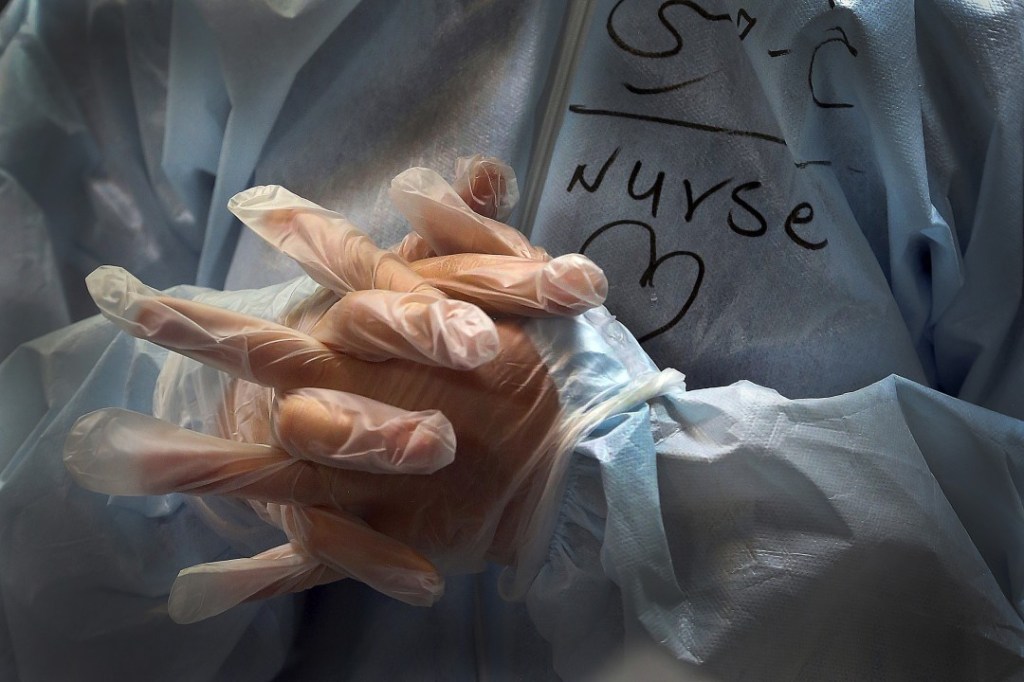


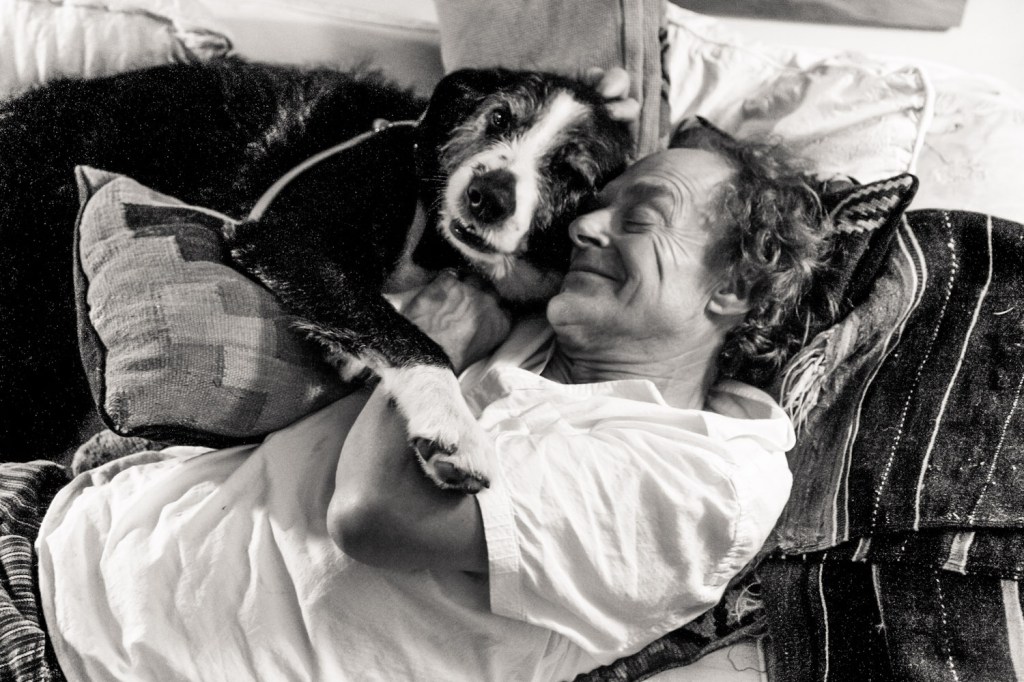
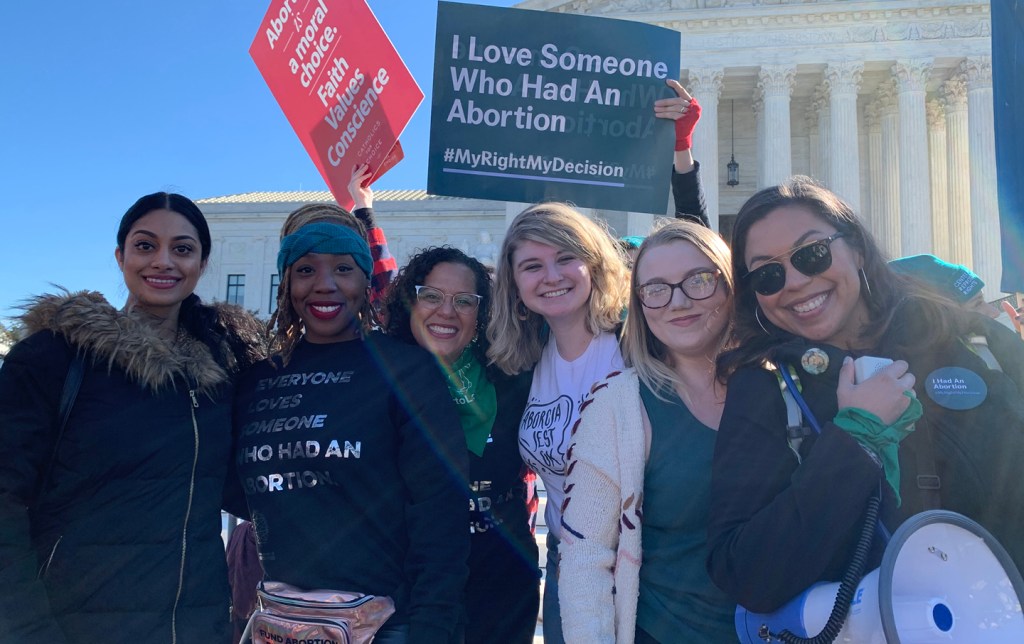



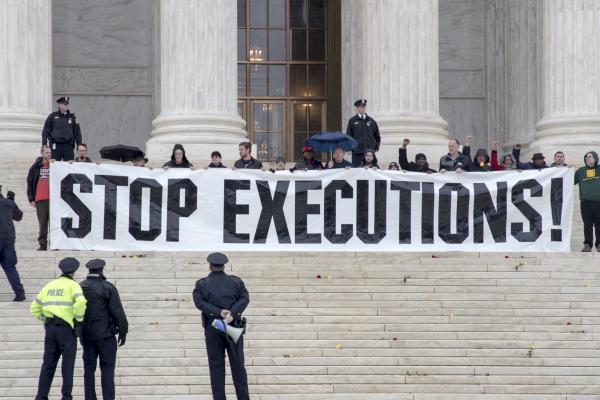

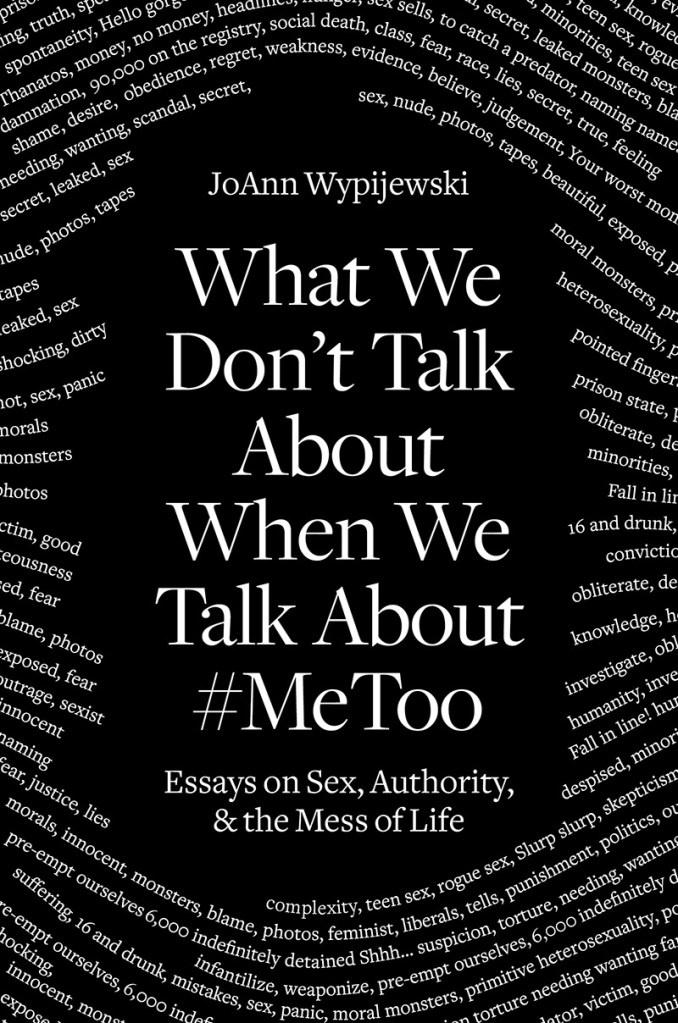

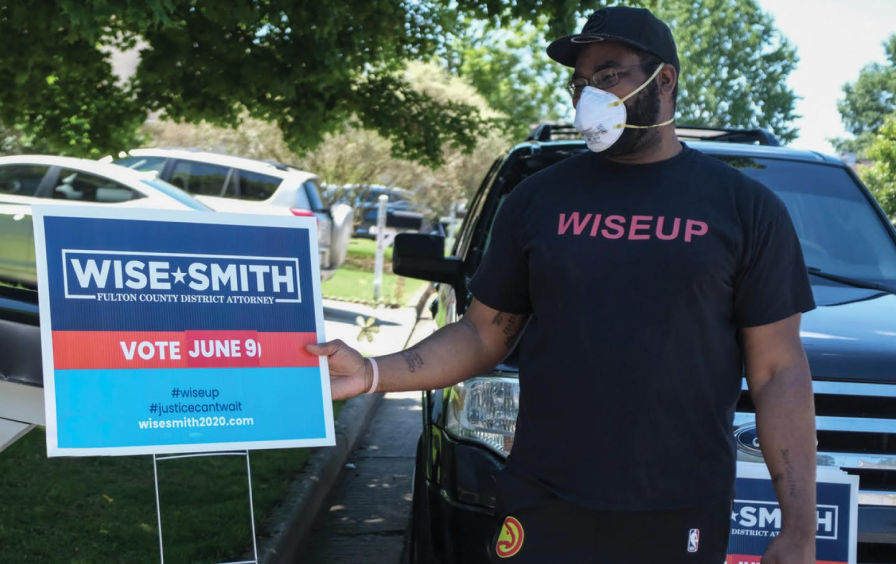

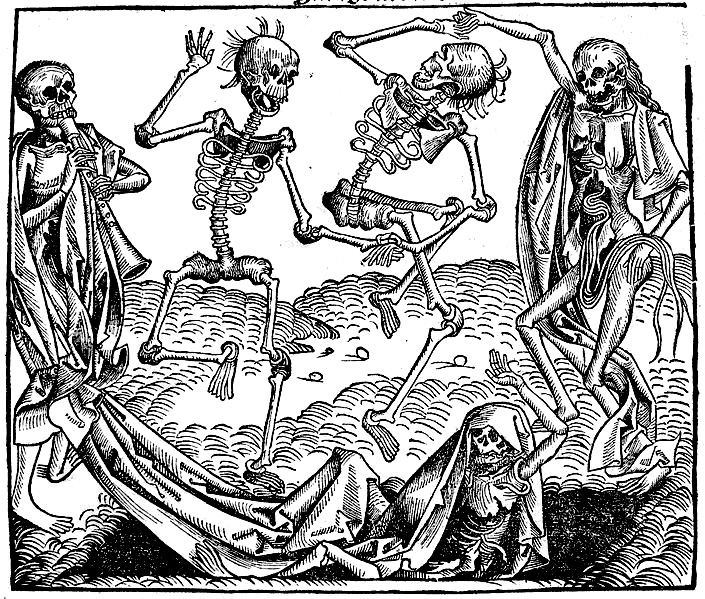




 Kopkind Colony