Sniffing the Zeitgeist is out!!

30 12 2013

k26 2013 Journalist and ActivistsTo all our friends at Kopkind:
SNIFFING THE ZEITGEIST: Written by the great journalist JoAnn Wypijewski, mailed to your home, and it includes this excerpt below:

“Kopkind’s political camp for journalists and activists began this year on the evening that, in Sanford, Florida, George Zimmerman was found not guilty for killing Trayvon Martin. …Twenty-six years ago, another mostly white jury acquitted another white man, Bernhard Goetz, of maiming four young black men on a New York subway. One of the men had said, “Give me five dollars”; Goetz was scared, he had a gun, so he began shooting. It was rumored the other men had screwdrivers, but even Goetz told police he thought their only weapon was their presence. He claimed self-defense anyway. After the verdict, Andy wrote in The Nation:

The defense contended that we all live in an urban jungle, where only the law of lions and wolves applies. It is an attractive but incomplete metaphor. Some beasts are more equal than others in this part of the forest, and the most successful predators don’t always have the sharpest teeth. Or the sharpest screwdrivers.

People here prey with land and laws, with college degrees and stock exchange seats. They kill with redlining and maim with snobbery. They mark their territory with sweetheart deals, political patronage and special favors. They use wealth as a weapon, race as a prison, status as a stick. Those who created that kind of jungle cannot now in good faith blame the ones least fit to survive for their pathetic strategies and bad manners. There was a bitter bumper sticker popular years ago, when Native American rights were in the news: “Custer Died For Our Sins.” This time Goetz was tried for our sins – and found innocent. It must not have been a fair trial.

If somehow you didn’t get your copy, just send me your address and I will send it along. And Happy New Year!!!

John Scagliotti
Administrator,
The Kopkind Colony.

PS: if you still would like to make a year-end contribution you can do so at our website http://www.kopkind.org. Thank you so much.


Sweet Sixteen Harvest Late Brunch

24 09 2013

It’s time again for Kopkind’s Harvest Late Brunch fundraiser!  Sunday, October 13, at 2 pm. Please come!

KOPKIND’S HARVEST LATE BRUNCH 

SUNDAY, OCTOBER 13, 2 pm 

Tapas Feast with PAMELA BROWN

After Trayvon:

Revisiting MLK’s ‘Triple Evils’, Reimagining Freedom

In the 20th century, Martin Luther King Jr. defined the problem of America under the weight of the “triple evils” of racism, economic exploitation and war. In the 21st, the case of Trayvon Martin has created an existential crisis for black Americans and allies engaged in the struggle for racial justice. It underscores, again, that for many millions of people the “ism” felt as the greatest threat is not capitalism or militarism. Yet these effusions of persistent racism are enmeshed in a context: of growing inequality under neoliberal economic regimes and of wide-scale state-sponsored violence globally.  It is time for all people to revisit MLK’s “triple evils” in forming a strategy for resistance and a vision of the future — reimagining what freedom might look like and how it might be achieved.

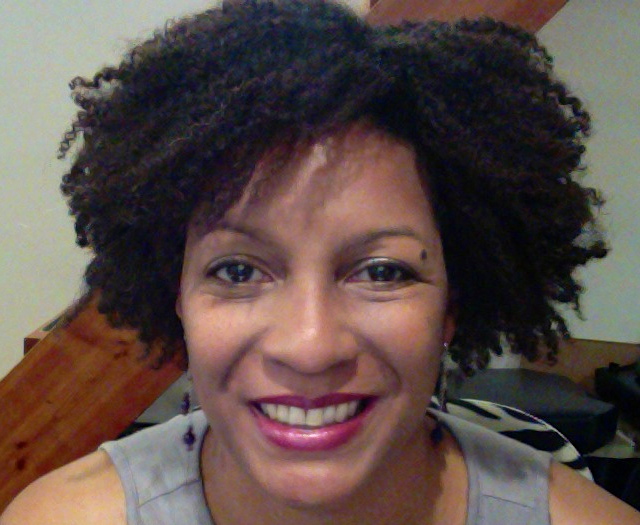
pam brown speaker 2014 harvest

Pamela Brown was deeply involved in Occupy Wall Street and has continued in its offshoot organizing and educational projects, at the convergence of race, class and debt. She is a columnist for Tidal Magazine and an organizer with the People’s Investigation of Wall Street. She was a founding member of Strike Debt and the Rolling Jubilee, and has been involved in campaigns and writing projects including the student debt pledge of refusal and the Debt Resistors Operations Manual. With a background in philosophy and media arts, Pam is currently a doctoral student in sociology at The New School.

Kopkind is a living memorial to the great radical journalist Andrew Kopkind.  Each summer since 1999 it has been bringing together journalists, activists and filmmakers for weeklong seminar/retreat sessions with the aim of thinking deeply, acting consciously, living expressively and extending the field for freedom, pleasure and imagination.

We hope to see you!  And feel free to share this invitation.


Jennifer Berkshire’s talk on-line for your viewing.

18 07 2013

A big THANK YOU to   Jon Flanders who recorded the talk “The Farce of Public Education” by Jennifer Berkshire.  He has made it available for those who would like to view.  This talk was given at our 15th Summer Journalist/Activist group at Tree Frog Farm in Guilford, Vermont.

http://www.youtube.com/watch?v=BsF-6L-mPGI
 

photos of the gathering can be seen here.

https://picasaweb.google.com/115535821288160866267/JenniferBerkshireOnBerkshireSpeaksOnFarceOfPublicEducationAtKopkindJuly14


Berkshire Speaks on Farce of Public Education at Kopkind July 14

6 07 2013

berkshire1

Jennifer Berkshire

Organ Barn, Tree Frog Farm, Guilford, Sunday July 14th

Public invited, please bring a dish for pot luck.

Potluck at 5:30pm; Talk at 7:pm

“Apart at the Seams: Race, Class and the War over Public Education (a farce)”

As we open the 15th summer for Kopkind’s retreat/seminar for journalists and activists, we’re inviting back someone who was with us at the very first camp in 1999 and whose work since has been inspired by the project’s dual commitment to storytelling and social movements.

After working in radio and print, as a freelancer, satirical commentator and editor of union newspapers, Jennifer started Little House Communications, helping communities, unions and grassroots organizations use media in their action campaigns. For the past few  years she has worked with groups involved in the struggle over public  schools. “The terrain of this fight is the schools, but the issue is really the internal borders separating the rich from the poor,”  she says. “It’s the death of a vision of equity concealed in the  language of reform, and increasingly in a hijacked language of civil  rights. How did we decide that to ‘succeed’ Jamal has to go to an all-black school with all-white teachers run by a for-profit company whose board is made up of all-white hedge fund managers?”

Her talk will explore the cruel farce of what she calls “achievement gaptivism”.

The talk takes place at the Organ Barn at Tree Frog Farm in Guilford, VT and if you would like direction


Kopkind + CID Filmmakers Retreat 2013

2 05 2013
Helen, with K25 group, center back row with arm raised at Treefrog Farm, 2012

Helen, with K25 group, center back row with arm raised at Treefrog Farm, 2012

Kopkind + CID Filmmakers Retreat 2013

     INVITATION TO FILMMAKERS            Deadline to apply is June 7, 2013      
We are pleased to announce a call to independent documentary filmmakers who would like to participate in a week long seminar and retreat in southern Vermont, limited to nine filmmakers along with special invited guests.

     July 28 – August 4, 2013. Treefrog Farm – Guilford, Vermont.

Imagine: you, your film or work-in-progress, and a week in a bucolic setting with other filmmakers. Enjoy film screenings in the barn, problem solving in the hot tub, networking at the swimming hole, conquering crowdfunding over coffee on the deck…

At a time when you may feel overwhelmed by everything it takes to make your film, this is the week to finally take the time to assess what filmmaking is to you and what it will take to make you succeed on your terms. Join us to explore your own work and the issues you face with your film and recharge your creative battery with a special brand of “radical relaxation: great films, great food and deep discussions on the art, politics and the plain fun of filmmaking.”


SNIFFING THE ZEITGEIST Our Newsletter is in the mail to our members.

26 12 2012

An excerpt  from 2012 newsletter (written by JoAnn Wypijewski)

“That first group of campers arrived at Tree Frog Farm on July 21. Only hours before, in Germany, Alexander Cockburn had died. Our political and journalistic collaborator, our supporter, our great friend for decades, Alex had once spent summers at the farm. With Andy and John Scagliotti and others, he was part of the brilliant, gamesome world that inspired so many of us who were young with the joy of politics, the joy of writing and doing—of living at an angle to the settled universe. Image

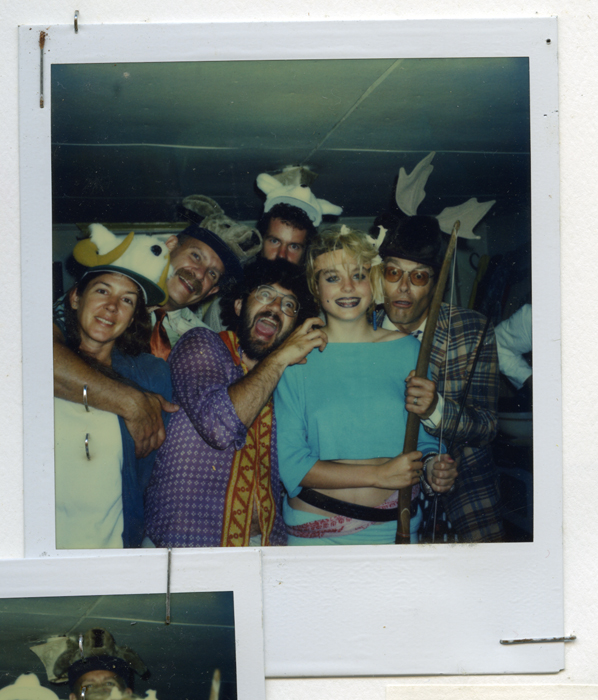
[Picture at Treefrog 1985, Katherine Kilgore, Andy Kopkind, John Scagliotti, Will K. Wilkins, Daisy Cockburn, Alex Cockburn]

The Occupiers could not have known as they set out for Kopkind that their presence would not just affirm the historical continuity of radical energy but also be a balm for grief. As the wonderful historian Peter Linebaugh says, “Sometimes you need the class.” At an impromptu evening gathering they listened to stories that people from the neighborhood told remembering Alex. At the end, a camper offered a poem by Nazim Hikmet, one of the great poets of the twentieth century, whom most of us had never encountered. So in the dark of the farm’s back field, with torches blazing, came this  ‘On Living,’ which goes in part

Living is no laughing matter:

              you must live with great seriousness

                             like a squirrel, for example—

I mean, without looking for something beyond and above living,

                             I mean living must be your whole occupation.

I mean you must take living so seriously

              that even at seventy, for example, you’ll plant olive trees—

              and not for your children, either,

              but because although you fear death you don’t believe it,

              because living, I mean, weighs heavier.

Let’s say we’re seriously ill, need surgery—

which is to say we might not get up

                                           from the white table.

Even though it’s impossible not to feel sad

                                           about going a little too soon,

we’ll still laugh at the jokes being told,

we’ll look out the window to see if it’s raining,

or still wait anxiously

              for the latest newscast. . .

Let’s say we’re at the front—

              for something worth fighting for, say.

There, in the first offensive, on that very day,

              we might fall on our face, dead.

We’ll know this with a curious anger,

              but we’ll still worry ourselves to death

              about the outcome of the war, which could last years.

Let’s say we’re in prison

and close to fifty,

and we have eighteen more years, say,

                                           before the iron doors will open.

We’ll still live with the outside,

with its people and animals, struggle and wind—

                                           I mean with the outside beyond the walls.

I mean, however and wherever we are,

              we must live as if we will never die.

If you would like a copy of the Zeitgeist mailed to you please send your name and address to John Scagliotti, The Kopkind Colony, 158 Kopkind Rd, Guilford, VT 05301

* * *


BOSS ROVE Author to speak at Kopkind Harvest

9 10 2012

Kopkind Features Craig Unger, Best-Selling Author, for Tapas & Talk on Big Money, Dirty Tricks and the Future of American Politics

More money will be spent on this presidential election than any in history. The Supreme Court’s Citizens United decision laid the ground, and more than any other single person Karl Rove is making it a reality. The GOP strategist who engineered the presidency of George W. Bush, Rove is back, pulling the strings to Mitt Romney and realizing a billion-dollar campaign through his SuperPAC American Crossroads and its affiliated nonprofit, Crossroads GPS.

What’s at stake for Romney is clear: the presidency. What’s at stake for the future of American politics, and what’s the lay of the land on the cusp of the November elections will be the subject for consideration when best-selling author Craig Unger appears at Kopkind’s annual Harvest fundraiser, on Sunday afternoon, October 14, at the Organ Barn in Guilford.

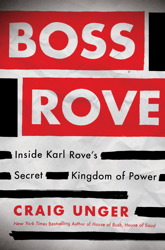
Unger, a contributing editor of Vanity Fair and the acclaimed author of House of Bush, House of Saud and other books, has written a new one, Boss Rove: Inside Karl Rove’s Secret Kingdom of Power. Dissecting Rove’s history of stolen votes, attack-dog politics and billionaire connections, Unger argues that Rove’s tactics are not aimed simply at winning elections; rather, they reflect “a far more grandiose vision — the forging of a historic re-alignment of America’s political landscape,” an effort to capture all three branches of government through “gam[ing] the American electoral system by whatever means necessary.” To that end, Rove has also been at the forefront of pushing the Republicans’ voter suppression efforts this year.

Unger, whose work was featured in Michael Moore’s Fahrenheit 9/11, has written for Esquire, The New Yorker and other magazines, was the deputy editor of The New York Observer and the editor of Boston Magazine. He was a friend of Andrew Kopkind, the Guilford resident called “the greatest journalist of his generation” when he died in 1994, in whose memory the Kopkind Colony was launched in 1998.

This will be the fifteenth Harvest fundraiser for the seminar/retreat project, which brings journalists, filmmakers and political activists from around the country and world to Guilford each summer for a week of cultural and political stimulation, reflection and rest.

The event, at the Organ Barn, 158 Kopkind Road, in Guilford, begins at 2 pm with a Harvest Late Brunch, a tapas feast, followed by Craig Unger’s talk. Tickets are $35, $25 for students. This is the only local benefit put on by Kopkind, which also presents free public movies and lectures in the summer. For reservations, more information or directions, contact 802.254.4859, or stonewal@sover.net.


Seeing New Possibilites: A Room With A View

4 10 2012


The Former National Director and Co-Director for NAMAC, The National Alliance for Media Arts and Culture writes on her recent stay at Kopkind.

What a Difference Those Days Made

by Helen De Michiel

“In a voiced community, we all flourish.”  Terry Tempest Williams

Dozing off under the deep darkness of a New England country summer night, I think that Susi Walsh has pulled a paper bag off my head.  It’s been smothering me for months, and I’ve been trying to punch my way out of it.

This is southern Vermont, and we are located on a rural road inhabited by dreamers, idealists, artists and writers drawn to its quietude, beauty and tolerance for social experimentation.  This is a spot on the American map where documentary has an audience, where art meets social change, and the convergence offers a respite from the dog-eat-dog of capital.

We’re a group of ten documentary filmmakers, assembling to participate in a seven-day residency that includes Kopkind’s secret ingredient: what organizers Susi Walsh and John Scagliotti call “radical relaxation.”  In the evenings we screen works-in-progress or completed films.  In the mornings we gather to offer each filmmaker a deep dive into reflection for the next step in his or her work.  These are not critique sessions but rather dialogues that open up to the strengths and aspirations of the work at hand.

The Kopkind environment encourages us to discover new perspectives for each filmmaker’s old problems.  We are instructed to pose questions to the group that can help us move ahead with our project.  Suggestions and brainstorms for improvement evolve over the course of three hours, and each filmmaker at the table speaks directly from experience.  No one is having an easy or certain time these days.  We are generous with one another.

As she welcomes us to this 25th Kopkind retreat, JoAnn Wypijewski’s comment stays with me: “One way or another, we’re all here on the quest for an authentic life.”  And, I want to add, to voice authentic values that motivate us to continue working on films that point to other ways of expressing this world we live in.

These are exhilarating times for nonfiction filmmaking, yet they are also perilous.  Piles of documentaries get made every year, yet only a handful command the kind of attention necessary to circulate widely and make a difference.  Each film can cost thousands or hundreds of thousands of dollars in labor and cash.  It can consume five or more years of a maker’s life and resources, with no guarantee of a return.

The Internet complicates these huge personal risks.  There is no model yet to compensate documentary media creators for publishing their work online and experimenting with new social media pathways to reach interested users.  In this transitory space where content is
free, crowd-funding projects is more popular than selling them.

Such facts surface, yet they don’t stop these filmmakers.  We are connected through a common impulse to structure random events into visual narratives, starring ordinary people and challenging ordinary ideas.  I observe my colleagues engaging one other around creativity – discovering entry points for characters, story lines, sound and the deeper insights that give each film its magic.  I marvel at how style plays a central role in balancing themes and the visceral experience of the content.

The subjects of the screenings are evocative of life’s thickness.  Settings range from the streets of Boston to women’s enclaves in occupied Palestine; from the Wisconsin mental health system to small-scale rural abattoirs; from an immigrants’ vigil in Arizona to wilderness education in New England.  School lunch in Berkeley holds a lesson for community democracy movements.  One family’s experience of open adoption triggers a meditation on race in America.

There is no doubt that audiences are shrinking for the lovingly made social issue documentary in its 60 – 90 minute feature form.  It is difficult for many of us to face our fears that the basic linear form is spiraling out in new, uncertain directions.  It’s less chilling and more exciting to confront these realities within a supportive community.  We honor the legacy of our craft.  We look at educating audiences to act in the world.  We dare to question standards for success, as old routes to distribution close and new paths have yet fully to emerge.

Across the week, I grow confident that our effort in hand-crafted “media” is only part of a larger quest to tell stories and transform thinking.  With new technologies, filmmaking becomes an activity in the service of larger missions rather than a profession for auteurs.  This approach opens up possibilities.  We bear witness, excavate truths with all the complications, human faces, messy landscapes and intimacy that can be felt only on large screens, and quickly disseminated across smaller mobile screens.

Susi wants us to shake up our creative energies, although she never says it directly.  We illustrate a dream of our future, engage in quick bursts of crafting, dance amid laser lights in a Saturday night Organ Barn fever.  We eat summery sensual meals created by Suki Ciappara.  We visit Susan Bonthron’s book bindery and learn how to make delicate marbled paper.

Huge and lasting lessons have bubbled up from this adventure.  My filmmaking voice is more clarified and grounded.  The directions I’m taking are more defined.  I sense that the drive to persist in this illogical endeavor is supported.  Problems are less daunting after a week of seeing gray morning mist on the green mountains, listening to raindrops against the corrugated metal roof of my cabin, plunging into small ponds or the lively West River current, and actually sleeping, a deep, dark, silent sleep with vivid dreams  — now that the virtual paper bag has been lifted off my head.

Susi, John and JoAnn have given us a tremendous gift: the experience of an alternative kind of success, based not on notions of financial allure or fame but on the meaning of our life and work as nonfiction filmakers in this new century, asking questions and sparking the conscience.

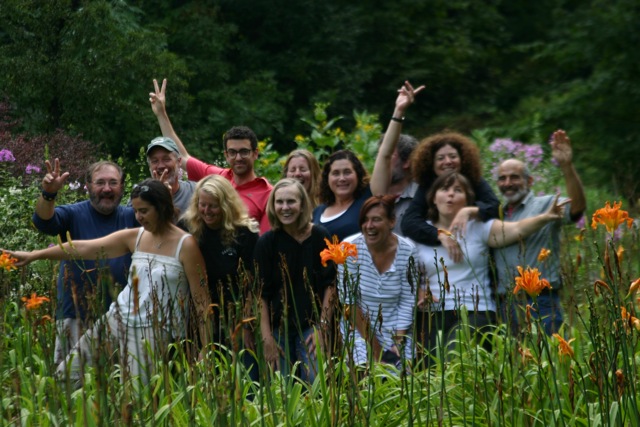
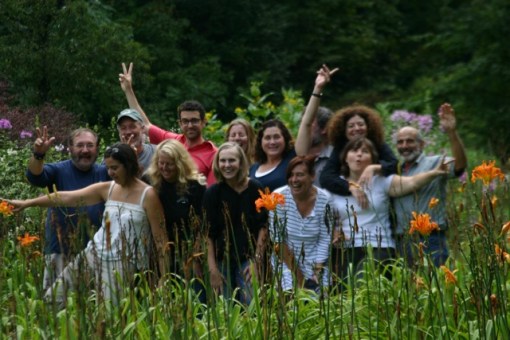
Helen, with K25 group, center back row with arm raised at Treefrog Farm, 2012


HELEN DEMICHEL is a Bay Area-based director, writer and producer whose work includes film, television, media installation and new media. She has created several award-winning independent documentary and dramatic works, including “Turn Here Sweet Corn,” “Tarantella,” and “The Gender Chip Project.” She produced “The Independents” and “Alive TV” series for public television, created community media projects with youth, and continues to write regularly about issues in the media field, including Open Space Documentary, which will appear in the forthcoming British Film Institute’s Companion to Documentary anthology. Her work is included in several museums around the country.

From 1996 – 2010 Helen served as the National Director and Co-Director for NAMAC, The National Alliance for Media Arts and Culture. From 2002-2007 she served on the Board of Directors and awards jury for The George F. Peabody Awards for Electronic Media. In Fall 2011 she joined the University of Oregon as a Visiting Scholar in the Arts & Administration Program. Her current transmedia project, Lunch Love Community, is a multiplatform documentary exploring food system reform through the lens of the Berkeley School Lunch Initiative and how a community came together to change the way children eat. Helen lives in Berkeley with her family and two cats.


Craig Unger, author of Boss Rove, to speak at Kopkind

16 09 2012

Kopkind’s 15thAnnual Harvest Late Brunch Benefit

Craig Unger, Author of “Boss Rove”

His talk is entitled:  “The Buying of the Presidency: 2012 — High Stakes, Dirty GOP Tricks and the Future of American Politics”

The talk  is a fundraiser for the Kopkind Colony.  Before Craig’s talk, a tapas feast will be served.

Sunday, October 14, 2 pm

The Organ Barn at Tree Frog Farm, 158 Kopkind Road, Guilford, Vt.

Autumn leaves. Great food. Spirited discussion.

A celebration of Kopkind’s summer project & a look toward November

Reservations: contact Kopkind Administrator, John Scagliotti via email: stonewal@sover.net;

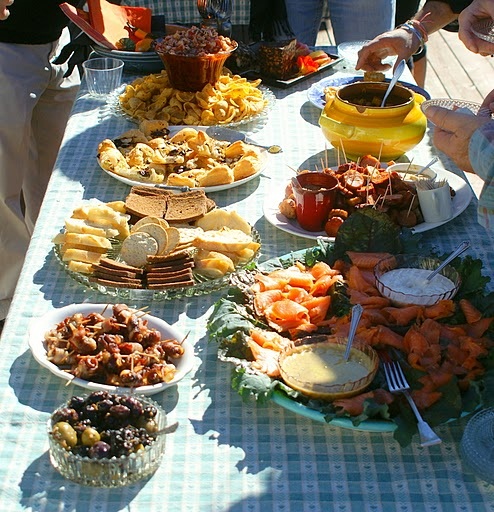
Kopkind’s famous Tapas Feast will be presented


Kopkind Grassroots Film Festival Spotlights the Personal

6 08 2012

Presenting Two New Films, free admission

Love and Other Anxieties at the Hooker Dunham, Brattleboro August 10th  7:30pm

White: A Memoir in Color at the Organ Barn, Guilford, August 11th  7:30pm

Filmmakers in attendance to take your questions.


{The festival is collaboration with the Center for Independent Documentary which is located in Boston.}

The Festival opens with a screening of Lyda Kuth’s Love and Other Anxieties at the Hooker Dunham Theater at 139 Main Street in Brattleboro on Friday night, August 10th at 7:30pm. In this year’s festival Kopkind focuses on the personal while not excluding the political. Susi Walsh, who runs the Center for Independent Documentary and co-programmer of the Kopkind/CID festival and retreat with John Scagliotti, has encouraged many of the filmmakers who have attended the Guilford seminars to take the time to look inward.  Susi explains, “It is this self-exploration that allows the filmmaker to connect in a deeper way with the political forces swirling around them.  This intimate process helps many of us, the viewer and the filmmaker, make some sense of the given realities of politics on our lives that we face every day.”

Faced with the realty that her only child will flee the nest for college, film-funder turned filmmaker Lyda Kuth gets anxious not only about how her daughter will fare in today’s world of love and romance, but also about her relationship with her husband of 20 years.  What will life be like after her daughter leaves?  What is the real meaning of love, marriage, and long-term commitment? She queries non-experts and experts alike, such as indie filmmaker Josh Safdie, playwright and musician Kyle Jarro, author and scholar Stephanie Coontz, about their successes and failures of the heart.  Love and Anxieties, a midlife story,  is both personal and poetic.  With the help of editor/co-writer Lucia Small (filmmaker of “My Father the Genius” and “The Axe in the Attic”),  Kuth has crafted a meditative documentary that is poignantly intimate yet surprisingly universal.   Lyda Kuth will be at the theater to take questions after the screening.

Lyda Kuth’s Wedding Day

The next evening, August 11th at 7:30pm  Kopkind opens up the Organ Barn in Guilford to the public again for a free screening of White: A Memoir in Color. In this deeply personal and emotional exploration of racial identity, director Joel Katz (“Strange Fruit” 2003) shares his family’s journey of immigration, assimilation, liberal idealism, bitter disillusionment and ultimately, reconciliation.   The son of white Jewish, immigrant parents who assimilated in 1930s Brooklyn, Katz’s father became a professor at Howard University. As a white Jew working at the nation’s preeminent African-American college during the turbulent civil rights era, he went through a range of difficult experiences and emotions. Katz himself became a professor at a predominantly non-white university, and later confronted his own racial attitudes as the adoptive parent to a mixed-race child of Irish-Italian and African-American descent. Highly engaging and thought-provoking, White: A Memoir in Color packs a powerful punch as it exposes intricate dimensions to race and prejudice in the melting pot of American society.  Joel Katz will be in the Organ Barn to take questions about the film following the screening.

Kopkind is a living memorial to the late Guilford resident and journalist Andrew Kopkind, who tracked politics and culture for thirty years for publications from Hard Times to The New York Times, The Nation to Esquire. The project puts on seminars for its summer participants and free events like this Film Festival for the public.  The theme of the seminars during the week with filmmakers is about diversity and filmmaking.  The seminars are co-sponsored by the Center for Independent Documentary.

For information or directions to the Organ Barn in Guilford, call John Scagliotti: 802.254.4859, , or  email stonewal@sover.net  All the screenings are free and donations to Kopkind are welcome.

#                                  #                                  #


Website for “Love and Other Anxieties” http://www.loveandotheranxieties.com/press-kit/


Website for “White: A Memoir in Color”  http://www.ajff.org/film/white-memoir-color


Kopkind Website: www.kopkind.org