Movie Night at Kopkind! – 7/25, 7:30 pm

23 07 2026

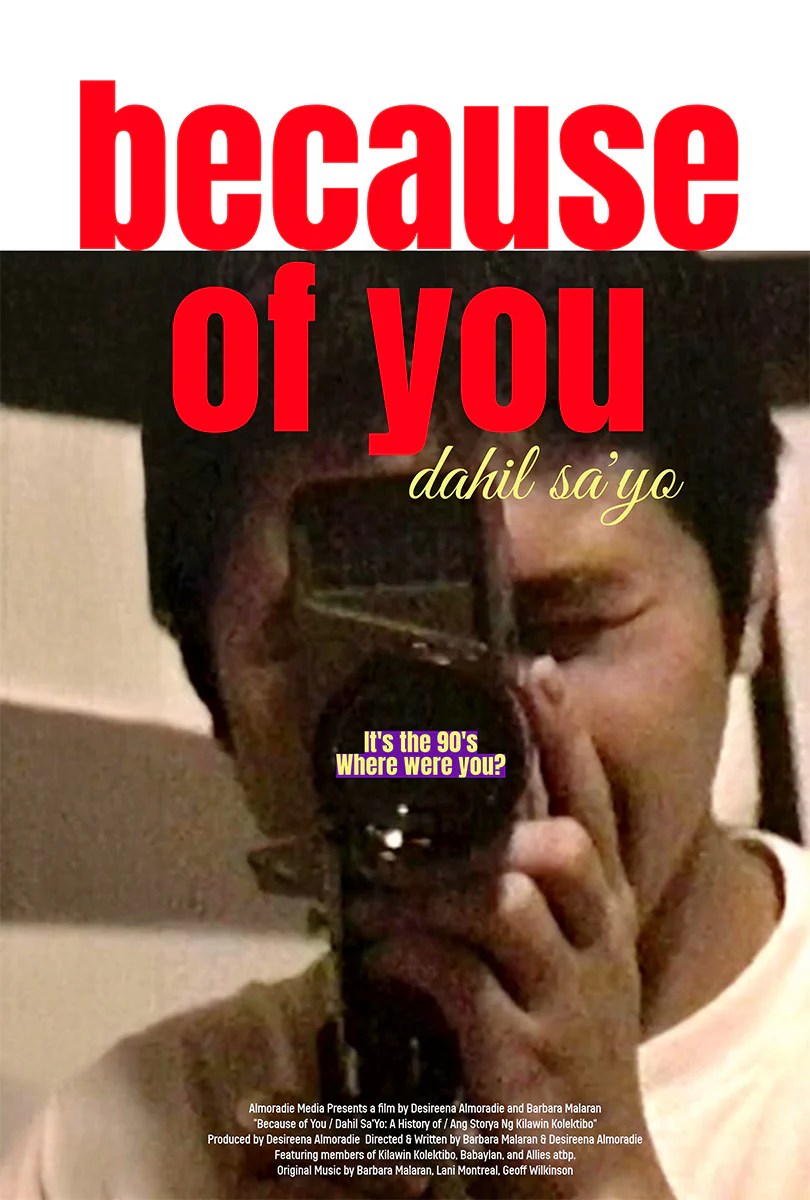
Please join us on Saturday, July 25, at 7:30 for a screening of Desireena Almoradie and Barbara Malaran’s new documentary, Because of You, a film they workshopped together a few years ago at Kopkind’s Film Camp collaboration with the Center for Independent Documentary. A thrill for us to present; a fascinating history of a pioneering collective of Filipnxs who came together in New York City in the mid-nineties called Kilawin Kolektibo; an extraordinary archival project. Desireena will join us to present the film and take questions after.

Culling from a treasure trove of over a quarter century’s worth of historic documentation, the film tells the story of members of the collective as they found one another, fell in love, and became each other’s lifeblood amidst a society that rejected them. Having experienced marginalization in Filipino culture because of their queerness and in mainstream gay culture because of their race, language and gender, the members of the group sought political empowerment and increased visibility.

Above all, they sought to create a space of friendship and safety for those who felt suspended between cultures and identities. Kilawin Kolektibo allowed them to transform their experience of oppression into one of joy and growth. It fostered lasting connections with similar groups in the global Filipinx diaspora, most significantly, with Babaylan, a queer Filipinx group in Toronto.

When Des and Barbie came to Kopkind/CID Film Camp, they had been working on the project only long distance. Their coming together here at Tree Frog Farm was in some ways symbolic of the story of convergences they were fashioning. Barbie gave us a vivid account of boxes of material that she had stored away under a bed, in a closet, saving for decades, for … what? Well, here they were now, drawing on that archive — footage, photographs, interviews and ephemera. Des had her own, as did other members of the kolektibo. From marching, partying and protesting, to sexual politics, this archive-driven film serves as an exhilarating memorial to the rebellion and nostalgia of the nineties and LGBTQIA+ history. 

It is also a testament to hidden histories, and to the importance of grassroots archives. Such archives are never assured, always partial; like the lives and experiences they document, they are not neat. As Andy Kopkind once said, ‘Life is not an unbroken narrative’. Because of You: A History of Kilawin Kolektibo honors such rich, passionate, exuberant life.


Scenes From a Pandemic: 11

15 06 2020

by Jon Crawford

A continuing series of dispatches from Kopkind participants, advisers, guests and friends on life in coronavirus time as they observe it.

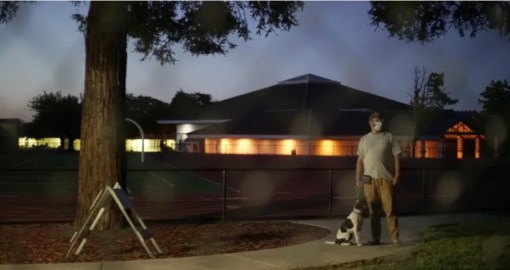
(photo: Jon Crawford)

Training a Dog

Mountain View, California

It turned out to be an Arkansas-sized dog in a California-sized apartment, so I asked my landlord to pull up the remains of last season’s tomato bushes to ease the recreations of the foster hound. I didn’t plant the tomatoes. The patio’s concrete had stopped at a freshly tilled plot, but they grew—volunteers—from generations of fertile farmland.

“Distraction,” says the dog trainer, who is standing six feet away from me, the scent of Purell bathing her fingers. “Distraction. It is one of three key elements to training a dog.”

I understand distraction. It’s California’s biggest product, along with food. Social media has perfected distraction. TikTok, Instagram, Facebook, even the news, pinged directly to your phone, snapping your focus away from what’s in front of you. I live in Santa Clara County, the first US epicenter for Covid-19, and have a job in Silicon Valley. Until the crisis, with my three meals usually served at work, I didn’t venture much outside the work-to-home routine. Then suddenly the place felt as if everyone and the redwood trees were holding their breath. BARK! The dog at the end of the leash has seen the only other dog and is entranced with a desire to say hello.

“No pulling,” the trainer commands. The dog had gone too far. “Distance,” the second rule to training a dog.

Distraction helps curb bad behavior in a dog. Say it sees a squirrel; it becomes excited, even anxious, therefore it cannot concentrate on your request. Because we want to control the dog, for its safety and our peace of mind, we lure its attention away with a high-value treat, cheese or sausage, something special. We make sure a dog understands distance because the dog knows when you can’t see it, and if not properly trained, when your back is turned it might become unreliable.

An affluent county, we listened to the experts, the scientists, and prepared for the curve even before state mandates. At first, sheltering in place felt like a cozy day inside. Almost like one of those looping low-fi music videos, mellow beats with an illustrated fox in a sweater doing homework filling the screen, anxiety curated away. Until, RING! My parents call. The virus hit Arkansas. There is no shelter in place. The curve goes up. Doordash doesn’t deliver out there, not where they live. Wholefoods, nope; it doesn’t either. Who in the family is the healthiest and can risk going into town? RING! My sister in Toronto, asks the same question. What can I do? A simple video call, a simulation.

The leash, when tugged, is tight and choking. The dog returns, no longer chasing the scent of the other dog, or the smell of the soil between the cracks of the concrete. “Duration,” the trainer says, is the foundation of training: start small and add time.

I’ve been here over three years, in Mountain View, with predictably pleasant weather, not like Little Rock, where the humidity hangs like a comforter, both oppressive and consoling. When you live in a place designed to make the world seem closer, the city itself starts to lose its sense of regionality. Now regionality starts to matter. A sense of place, a culture made by the habits of people, gathering, cooking, watching, and holding each other, together. The feeling of being home, of knowing a spot no one else knows, knowing someone. Here, at this moment, a city full of people from all over the world, who connect the world, but whom I have rarely ever seen, can feel sterile.

The dog learned to sit nearly in an instant. But she won’t hold it. Not for long. This is because I wasn’t paying attention to when I would give her praise. Timing matters.

Training is really the study of behavior. Something this town knows well. At some point, when no one is looking, when we have waited for the appropriate time, I hope we will give chase, slip the leash, and jump up into each other’s arms—without a word of reprimand. We will remember what it felt like to be in our first bar, to see a film with others, to eat in a small diner, or hear live music, we will remember to wander off the leash and find new smells, celebrating the places and people that allow us to gather. Or, perhaps, we will remain where we are, well trained, our behavior acceptable, content with distraction, able to be left alone.

Jon Crawford is a documentary filmmaker, working in the Bay Area and often the American South. He participated in film camp, a collaboration between Kopkind and the Center for Independent Documentary, in 2018 and 2019.

Scenes From a Pandemic is a Kopkind/Nation magazine collaboration. This piece originally appeared June 10, 2020, on The Nation site. We thank Katrina vanden Heuvel, D.D. Guttenplan and The Nation crew.

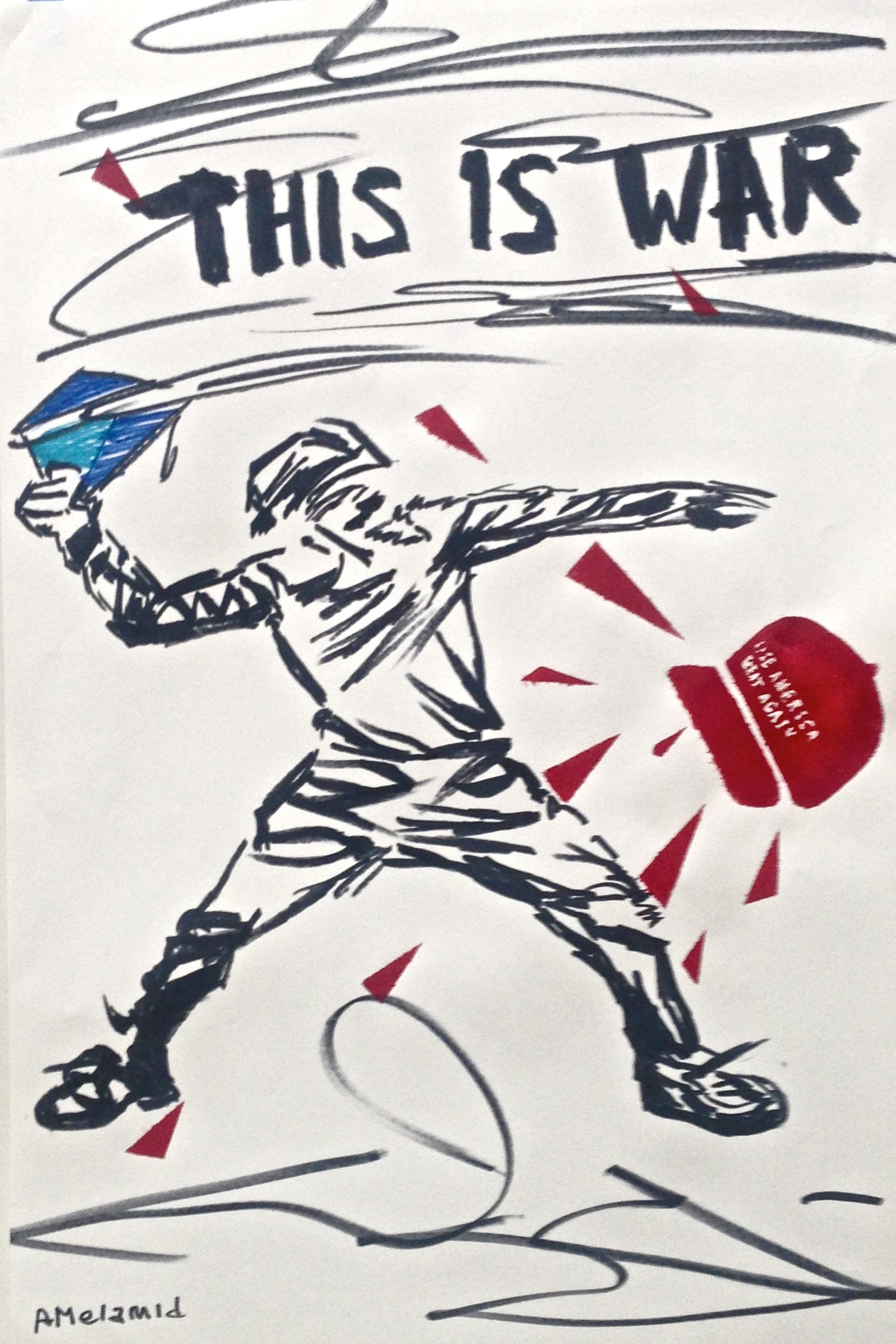
Bonus: A Poster From Alex Melamid

Copy, print, post (legally, of course). And kindly wear your mask, don’t throw it.

Alex Melamid is a Russian-born artist, an emigré to New York, where he has lived and worked since the 1970s. In the Soviet Union he was instrumental, with Vitaly Komar and others, in the Sots art movement (a parallel to pop art in the West). Komar and Melamid were a creative team until 2003. One of their projects, “The People’s Choice,” about popular dreams of art and the funny thing about opinion polls, was chronicled in JoAnn Wypijewski’s Painting By Numbers: Komar and Melamid’s Scientific Guide to Art. Alex was a virtual guest speaker at Kopkind when that was unusual, in 2016.


Public Event: POTLUCK and MOVIE NIGHT

29 06 2011

Learning From the World
Sunday, July 17 – Movie Night
5:30 – Potluck barbecue
7:00 – Screening

“LIVE FROM THE MEDIA REVOLUTION”, a selection of videos shot in the midst of the thrilling Arab Spring among some of the people who made it,
with filmmaker Greg Berger  Email John Scagliotti, Administrator of Kopkind for directions for the Organ Barn..  stonewal@sover.net  You can see more about this with this local article from the Brattleboro Reformer


Greg Berger will be at Tree Frog Farm July 17