We are sad to announce that because Covid has been detected in the cohort here at Tree Frog Farm for Kopkind/CID Film Camp, we are canceling this evening’s public screening of Because of You, a wonderful film that was workshopped here a couple of years ago by Desireena Almoradie and Barbara Malaran. We are all very disappointed.
Tonight’s Screening Canceled, 7/25
25 07 2026Comments : Leave a Comment »
Categories : Uncategorized
Movie Night at Kopkind! – 7/25, 7:30 pm
23 07 2026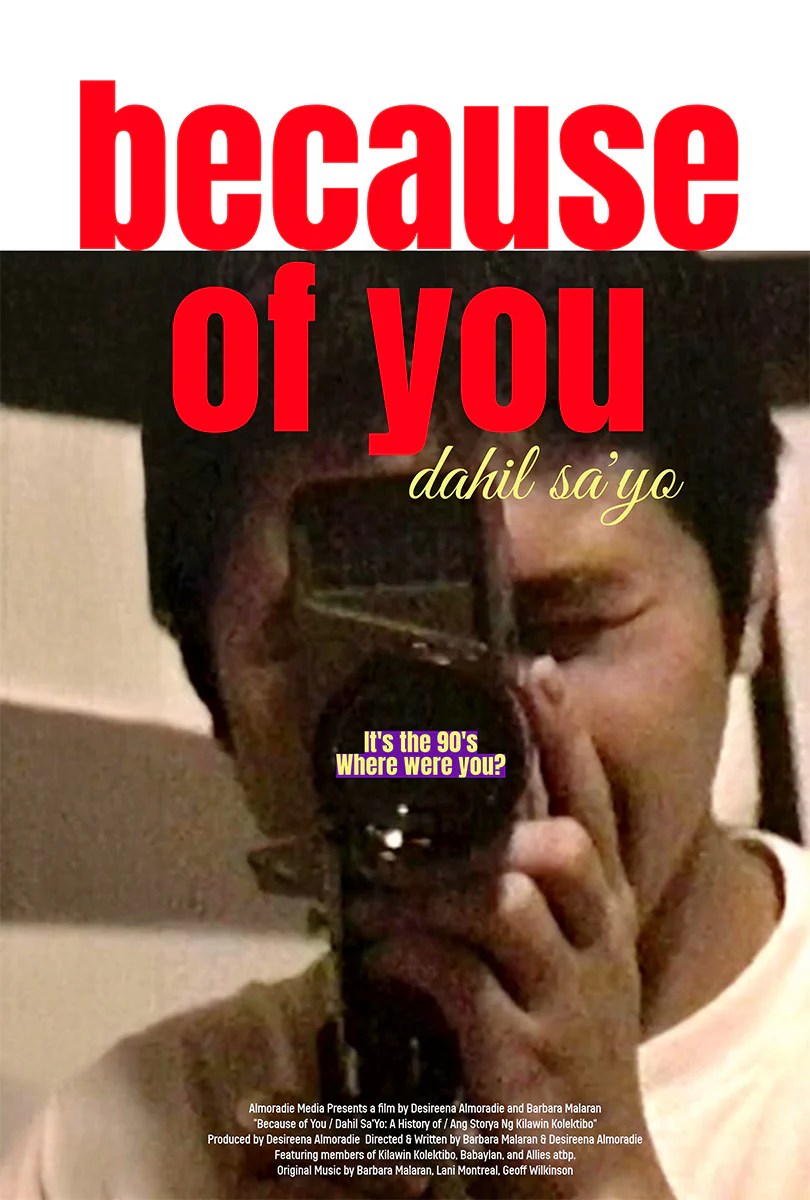
It’s Personal, It’s Political, It’s Passionate
Please join us on Saturday, July 25, at 7:30 for a screening of Desireena Almoradie and Barbara Malaran’s new documentary, Because of You, a film they workshopped together a few years ago at Kopkind’s Film Camp collaboration with the Center for Independent Documentary. A thrill for us to present; a fascinating history of a pioneering collective of Filipnxs who came together in New York City in the mid-nineties called Kilawin Kolektibo; an extraordinary archival project. Desireena will join us to present the film and take questions after.
Culling from a treasure trove of over a quarter century’s worth of historic documentation, the film tells the story of members of the collective as they found one another, fell in love, and became each other’s lifeblood amidst a society that rejected them. Having experienced marginalization in Filipino culture because of their queerness and in mainstream gay culture because of their race, language and gender, the members of the group sought political empowerment and increased visibility.
Above all, they sought to create a space of friendship and safety for those who felt suspended between cultures and identities. Kilawin Kolektibo allowed them to transform their experience of oppression into one of joy and growth. It fostered lasting connections with similar groups in the global Filipinx diaspora, most significantly, with Babaylan, a queer Filipinx group in Toronto.
When Des and Barbie came to Kopkind/CID Film Camp, they had been working on the project only long distance. Their coming together here at Tree Frog Farm was in some ways symbolic of the story of convergences they were fashioning. Barbie gave us a vivid account of boxes of material that she had stored away under a bed, in a closet, saving for decades, for … what? Well, here they were now, drawing on that archive — footage, photographs, interviews and ephemera. Des had her own, as did other members of the kolektibo. From marching, partying and protesting, to sexual politics, this archive-driven film serves as an exhilarating memorial to the rebellion and nostalgia of the nineties and LGBTQIA+ history.
It is also a testament to hidden histories, and to the importance of grassroots archives. Such archives are never assured, always partial; like the lives and experiences they document, they are not neat. As Andy Kopkind once said, ‘Life is not an unbroken narrative’. Because of You: A History of Kilawin Kolektibo honors such rich, passionate, exuberant life.
Please join us on Saturday, July 25, at Tree Frog Farm for this free public event. The screening will be preceded by a little wine; and afterward, a little dessert. Be there! 158 Kopkind Road, Guilford, VT 05301. At 7:30 pm. For directions or more information: jwyp2000@gmail.com.
Comments : Leave a Comment »
Tags: Documentary, filipinx, Film, history, lgbtq, movies, news
Categories : Uncategorized
Tyrants Be Gone!
2 07 2026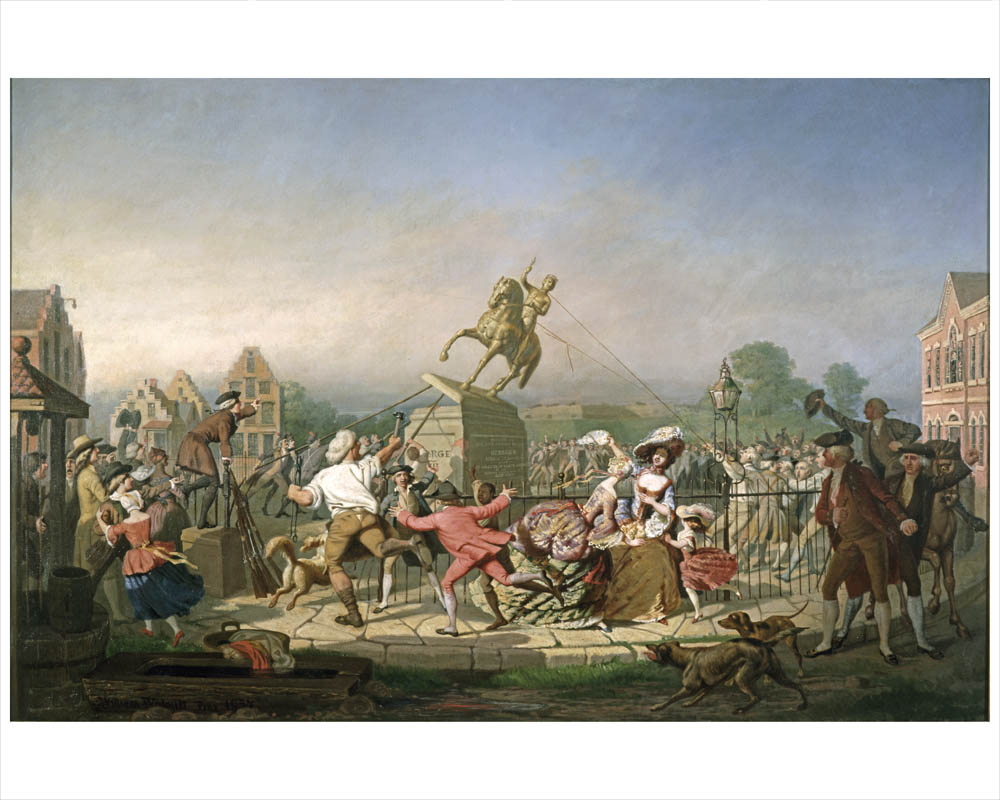
Semiquincentennial: Not all Ridiculous
In New York City, the Declaration of Independence was publicly pronounced for the first time on July 9, 1776. Thereupon, the people did not stroke their chins and adjust their bonnets; rather, that evening they proceeded to attach ropes to a fifteen-foot, 4,000-pound gilt statue of King George III erected at Bowling Green, and haul it down. The gold was but veneer, with something far more useful, lead, beneath. Melted down, this monument to monarchy was transformed into many thousands of musket balls to fire at the King’s troops. It’s said that an 11-year-old girl involved in the production process, Mary Ann Wolcott, was alone responsible for making 10,000 musket balls.
This holiday weekend, an immersive documentary which was workshopped at Kopkind/CID ‘film camp’ last summer is playing every hour on a loop from 11 am to 5 pm at Dupont Underground, 19 Dupont Circle NW, Washington, DC. By George: It All Comes Down, by director Paul Moon, tells the story of the statue’s toppling while also exploring the many instances of social mobilizations to tear down monuments, from ancient Rome to the Arab Spring to the height of the Black Lives Matter movement, which saw the removal of statues from Richmond’s Monument Avenue among other places. The film will have a public outdoor screening at 8 pm at The Battery in New York, on the 250th anniversary of the toppling, July 9. (Earlier in the day the New York Historical museum will host a re-enactment of the revolutionary July events.)
We are so used, in the United States, to being taught of the Revolution as a meeting of propertied white men in Philadelphia arguing over language, signing their names and going down in history as Founding Fathers that it’s always something of a surprise to be reminded that, no, the Revolution was a raucous, bloody, grinding and occasionally joyous event in people’s history. The revel of July 9 in New York was swiftly followed by the royal armies’ victory in the battles of New York and military occupation of the city, beginning of August 1776 and lasting seven years. New York was the only city under British occupation for the war’s entirety. Those who fled became refugees; those who stayed lived under martial law, many as real or de facto internees, their homes confiscated, their shelter tents, their diets meager; more than 11,500 of those who fought and didn’t die instantly or escape died of abuse, starvation and disease on at least sixteen prison ships, rotting hulks that the British used to hold POWs, then known as traitors, in Wallabout Bay in Brooklyn. Along with local revolutionaries and those from other states, hundreds of internationalists — Spanish, French, Dutch and Polish troops or volunteers — languished or died on the ‘hell ships’. The bodies of the dead were thrown overboard or buried in shallow graves by the shore. Ultimately bones were gathered up in barrels and interred, augmented with new finds, dug up, interred again — a tangled story that lay behind the Prison Ship Martyrs’ Monument, which one is unlikely to learn about in school but might stumble upon in Fort Greene Park.
No revolution is without its contradictions, and America’s was full of them. But its stories of oppression, resistance, war, flight and far-from-finished freedom dreams also link people in this country with others everywhere who have ever dreamed and suffered and strived to make the world anew — if only we recognize it.
Comments : Leave a Comment »
Tags: american-revolution, history, politics
Categories : Uncategorized

