One More Summer Event! Featuring the authors of Against Tech Oligarchy
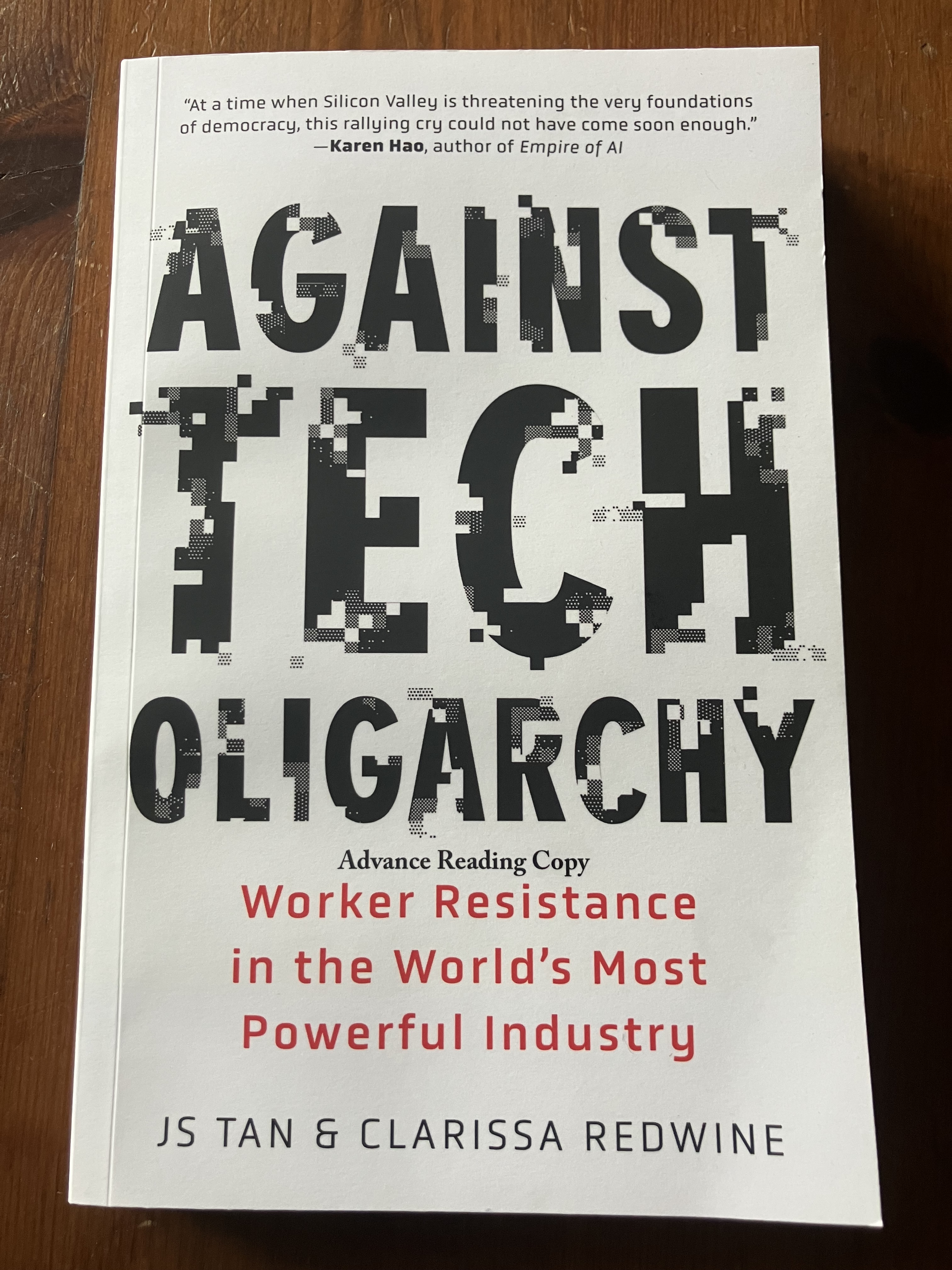
In anticipation of their imminent book tour in major cities across the country, Clarissa Redwine (Kopkind alum) and JS Tan, co-authors of the soon-to-be-published Against Tech Oligarchy, are planning a series of mock trials of the tech oligarchs whom their book indicts through accounts from workers at Google, Microsoft, Amazon, Twitter, etc. First in the dock: Jeff Bezos.
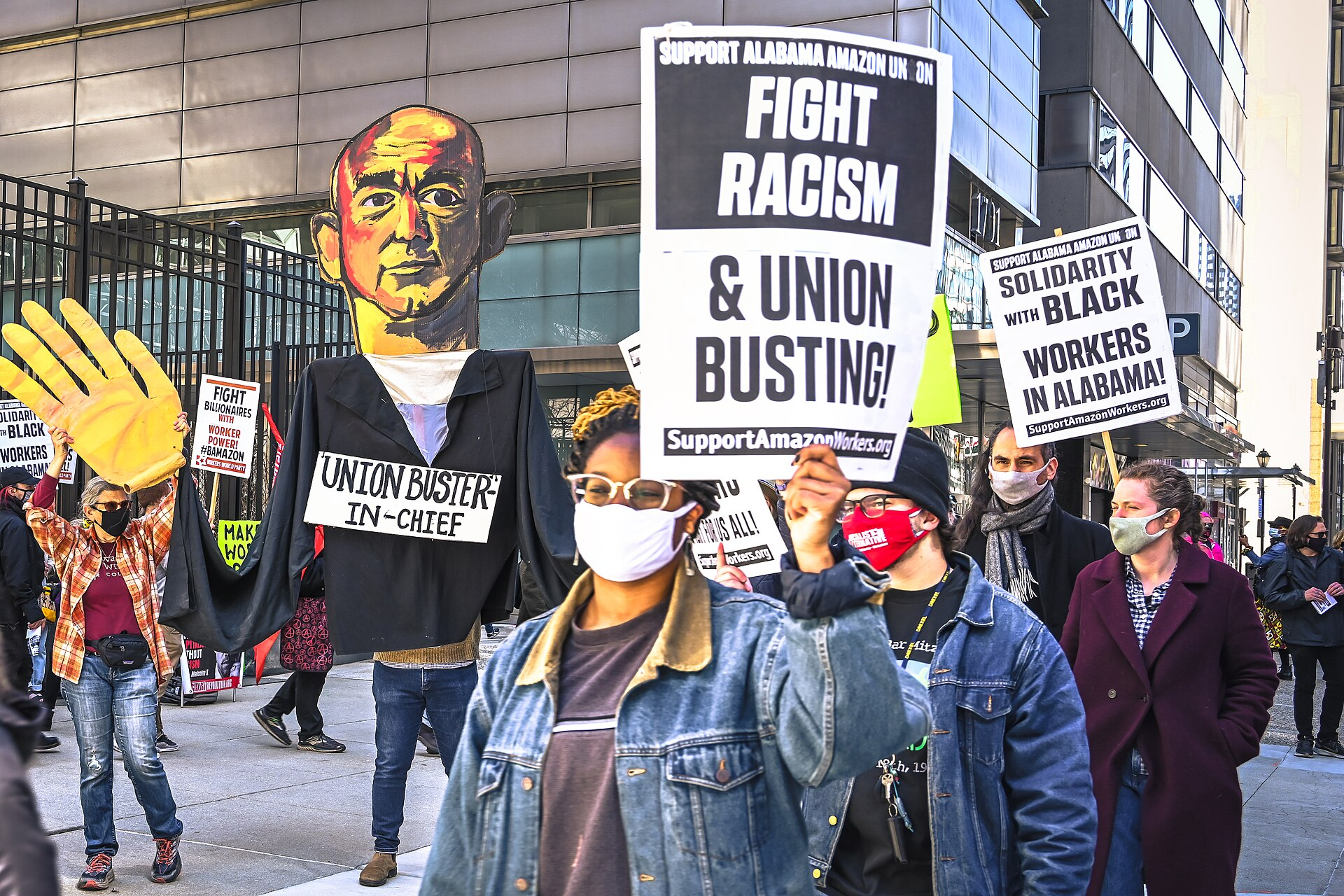
On Saturday, August 22, at 7 pm, in a free public event sponsored by Kopkind, witnesses will present evidence of the Amazon executive’s most notable injuries to the working class. Presenting the case-against along with Tan and Redwine will be local educator Lucy Johnston. Join us at the Organ Barn for a boisterous, cathartic celebration of working-class solidarity and power. 158 Kopkind Road, Guilford, Vt. 05301.
Against Tech Oligarchy is the inside story of the tech workers movement—and the billionaires’ anti-worker backlash now reshaping the industry. After Donald Trump’s 2016 election, the tech industry sprang into action to oppose his agenda, with workers staging walkouts against ICE contracts, and CEOs joining mass mobilizations against the Muslim ban. But it wasn’t long before the tech oligarchs started to fall in line with the new administration. Using the autonomy afforded them by the industry’s progressive and mission-driven culture, tens of thousands of tech workers began speaking out against their own bosses. This burgeoning resistance included organizing against military contracts, walkouts to protest sexism, agitation about tech’s role in the climate crisis, and a wave of union drives. By the early 2020s, tech workers had sparked an exciting movement that seemed to hold the potential to check the industry’s rapid growth and reactionary drift. As their struggle grew, so did the employers’ hostility. Hellbent on stamping out dissent, the billionaire owners have embraced Trumpism, fired organizers and lashed out against the ‘woke’ ideology they blamed for turning their once loyal employees against them.
Clarissa Redwine was part of Kopkind’s seminar/retreat for journalists and organizers in 2024, where she regaled us with rousing stories of helping to organize a union at Kickstarter. She is co-founder of the tech organizing conference Circuit Breakers, and her organizing work has been featured in The New York Times, the BBC, The Guardian, The Verge, TechCrunch and elsewhere. JS Tan, a former tech worker, is pursuing a PhD at MIT. His work has appeared in Jacobin, the Times, MIT Technology Review, Dissent, Foreign Policy and The Baffler, among other outlets. Their book has been called ‘an indispensable analysis of the tech worker movement from two of its luminaries’, by Ben Tarnoff, co-author of Muskism. ‘This is an essential book for understanding class struggle under digital capitalism.’
Or, as Clarissa, a friend and supporter of Kopkind since her time here, puts it: ‘The oligarchs seem untouchable, until the working class bands together. This mock trial offers a glimpse of what it feels like to organize against the ruling class and fight for a more just world.’
Be there! Anyone needing directions, contact JoAnn Wypijewski at jwyp2000@gmail.com.
May Day recovers memories, every year, of the origins of International Workers’ Day, sparked by the general strike of 1886 in Chicago — ‘Haymarket’, in short, and the arc of fellow feeling, courage, state violence and global solidarity the name implies. May Day returns us, every year, to our friend Peter Linebaugh’s marvelous book The Incomplete, True, Authentic, and Wonderful History of May Day (PM Press). ‘Marvelous’ is literal here, because the story of human striving for freedom and equality, of the conflict inherent in class consciousness and class struggle, contains marvels, indeed, and Peter, a past Kopkind mentor and speaker, seems to know all of them. “We cannot avoid the ache of history,” he writes; “its grief we feel in the gut.” But also: “We must study the record. It must pass through our heart again.”
For this record, Peter raids the storehouse of cultural artifact and history, including the great book by James Green, Death in the Haymarket: A Story of Chicago, the First Labor Movement, and the Bombing That Divided Gilded Age America (which featured in a public talk at Kopkind many years ago). “The book is trying to put some freedom back into history, telling us that it could have been otherwise”, Peter writes. “We call this human agency. The theory is something like this. It’s human history, we’re humans, history is something we make with our deeds and our words. This is where free will rubs up against determinism.” The history has special resonance these days, in which the ruling class not only plays its standard role, aiming to make everyday people feel small, confused, helplessly divided, but the president elevates the Haymarket period as the time of America’s greatest happiness and general bounty.
So today, a bit of the record from Peter’s telling:
The freight handlers struck, the upholsterers struck, the lumber shovers went on strike. Four hundred seamstresses left work in joyous mood. A storm of strikes swept Chicago, on the first of May 1886. The great refusal, Jim Green calls it. It was a new kind of labor movement that “pulled in immigrants and common laborers.” Irish, Bohemian, German, French, Czech, Scot, English, to name a few. In Socialist Sunday Schools, brass bands, choirs, little theatres, saloons, there was a working-class culture in Chicago. The Chicago Tribune hated it and compared the immigrants to zoological nightmares. It demanded deportation of “ungrateful hyenas” or “slavic wolves” and “wild beasts” and the Bohemian women who “acted like tigresses.” In the spring of 1886 strikes appeared everywhere in industrial centers; called the Great Upheaval, it agitated for shorter hours. Of course they were against the mechanization of labor, against the exploitation of child labor, opposed to the convict lease system of labor, and opposed to contract labor. The anthem of the Knights of Labor was the “Eight-Hour Song”:
We want to feel the sunshine; / We want to smell the flowers; / We’re sure God has willed it. / And we mean to have eight hours. / We’re summoning our forces from / Shipyard, shop and mill; / Eight hours for work, eight hours for rest, / Eight hours for what we will.
Anyone carrying a sign to a protest these days saying ‘Make America Good Again’ (as some have) need to study the record. Any children of long-ago European immigrants, denied the knowledge of their forebears’ battles and bravery, need to study the record. And it is the job of the left to make that record a common knowledge again, “a people’s story,” recovered from the same power-made tombs from which have been unearthed so many peoples’ stories, newly told, as Peter writes “in the people’s language with the people’s future: the opposite of the official story”.
Green tells the story of the strike, of the time, with detail and verve. He tells of the bomb in Haymarket Square, believed to be thrown by police; and the aftermath, a period of police terrorism, of torture, handcuffed justice and hangings. “The day will come when our silence will be more powerful than the voices you are throttling today”, August Spies, a German immigrant and radical newspaper editor, famously declared before his execution. Of the Haymarket Martyrs, Peter writes: “None died from a broken neck, all strangled to death, slowly as it appeared to the witnesses, convulsing and twisting on the rope. That was November 11, 1887. James Green tells us that it was a turning point in American history.” Green also describes the astonishing sweep of workers’ refusals and solidarity. Globally, May Day was born. In the US, the ruling class declared May 1 to be Law Day. Repression was ferocious in this now-named best of all times. History was not finished, though. Nor are its curiosities without relevance today.
The 151-foot Statue of Liberty was dedicated only two weeks before the hangings in Chicago. Inscribed on its pedestal were the words of Emma Lazarus: “Give me your tired, your poor, / Your huddled masses, yearning to breathe free, / The wretched refuse of your teeming shore. / Send these, the homeless, the tempest-tossed, to me: I lift my lamp beside the golden door.”
John Pemberton, a pharmacist, invented a medicine to relieve headaches and alleviate nausea. It combines coca leaves from the Andes with cola nuts from Africa, mixed with water, caramel and sugar: Coca-Cola, the Atlantic remedy for the ills of the barbarism of capitalism. Both William Morris in England and José Martí exiled from Cuba in Manhattan likened the Chicago working class to a cornered animal.
At the same time, Martí, reviewing the rivalries of nationalities, ethnicities and colors among the working classes, wrote that “the common denominator of pain has accelerated the concerted action of all who suffer”. Here, Peter writes, “is heart as a political principle”.
Pablo Neruda, José Martí, even Walt Whitman had a big, hemispheric conception of America: two continents, half the planet, yet united by the German geographer Humboldt’s Afro-America, a big S: New Orleans, Cuba, Venezuela and Brazil. What happens in one part affects the other: sugar, aluminum, gold, bananas, silver, copper, coffee, rum, pot, and coke, yes, they are the products, the commodities, ripped from the bowels of the earth. They’re easier to recognize than the undergrounds of people, whose migrations, sailings, tunneling have preserved the memory of los mártires. José Martí predicted that “the world’s working class will revive them [the martyrs’ memories] every First of May.”
A century later Eduardo Galeano wrote, “That is still not known, but Martí always writes as if hearing, where it is least expected, the cry of a newborn child.”
In Havana in 1887 the anarcho-syndicalists started a newspaper, El Productor, which covered the Haymarket tragedy … May Day was celebrated in Mexico in 1913. From then on Primero de Mayo became a national holiday known as the Day of the Martyrs of Chicago in Italy, France, Spain, Argentina, Cuba, Mexico. In 1903 Teddy Roosevelt signed an immigration law denying entry into the United States of anarchists, paupers, prostitutes, and the insane. Galeano celebrated the marriage of heart and mind. “From the moment we enter school or church, education chops us into pieces: it teaches us to divorce soul from body and mind from heart. The fishermen of the Colombian coast must be learned doctors of ethics and morality, for they invented the word sentipensante, feeling-thinking, to define language that speaks the truth.” … Halfway between the gut and the head lies the heart. The heart and soul of our movement may be found on May Day, and it’s going to take our arms and legs to find them, as well as our brains.
It took fifty-two years just to win the eight-hour day by law. It took a fight against child labor to win free public schools, as Jennifer Berkshire explained in a Kopkind seminar a couple summers ago. It took a civil war, a hundred years of struggle and Bloody Sunday in Selma to win voting rights legislation in 1965 — the same year, as Laura Flanders, another friend and longtime Kopkinder, reminds us, that LBJ also put immigration reform and Medicare on Washington’s agenda pushed by the spirit of the time. As we see, no victory is permanent. The mind and heart for solidarity could be. In this briefest sketch of the incomplete, true, authentic and wonderful history of May Day run threads to be gathered for that kind of sentipensante, that solidarity expressed in a people’s language and acted upon in common. People everywhere want to feel the sunshine and smell the flowers. So, “Take heart! All out for May Day!”

 Kopkind Colony